Home › California › Planting zone
California
California Planting Zone Map
California has USDA plant hardiness zones 5b to 11a on the 2023 USDA map. The most common zone by county is 9b (26 of 58 counties), then 9a (13).
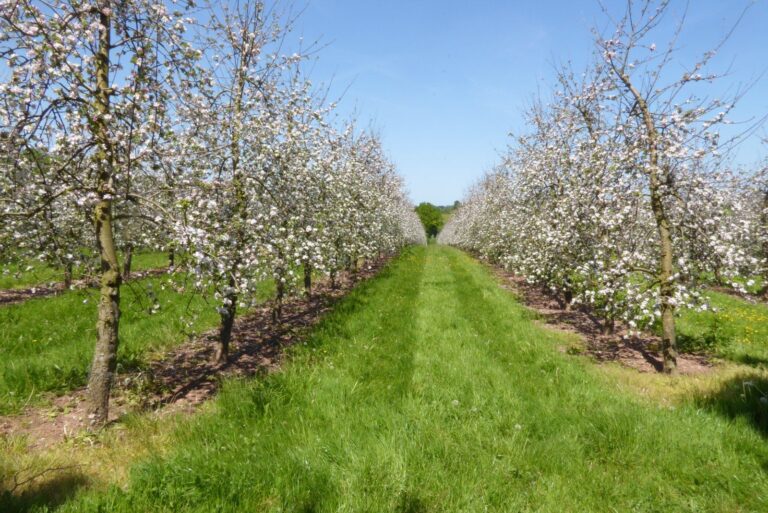
Photo: Rows of apple trees in white blossom along a grassy orchard alley. Philip Halling, CC BY-SA 2.0, via Wikimedia Commons
Find the planting zone for your California county
Zones: USDA ARS 2023 Plant Hardiness Zone Map, main zone of each county by ZIP code area. Frost dates: NOAA 1991-2020 normals.


USDA plant hardiness zone map of California
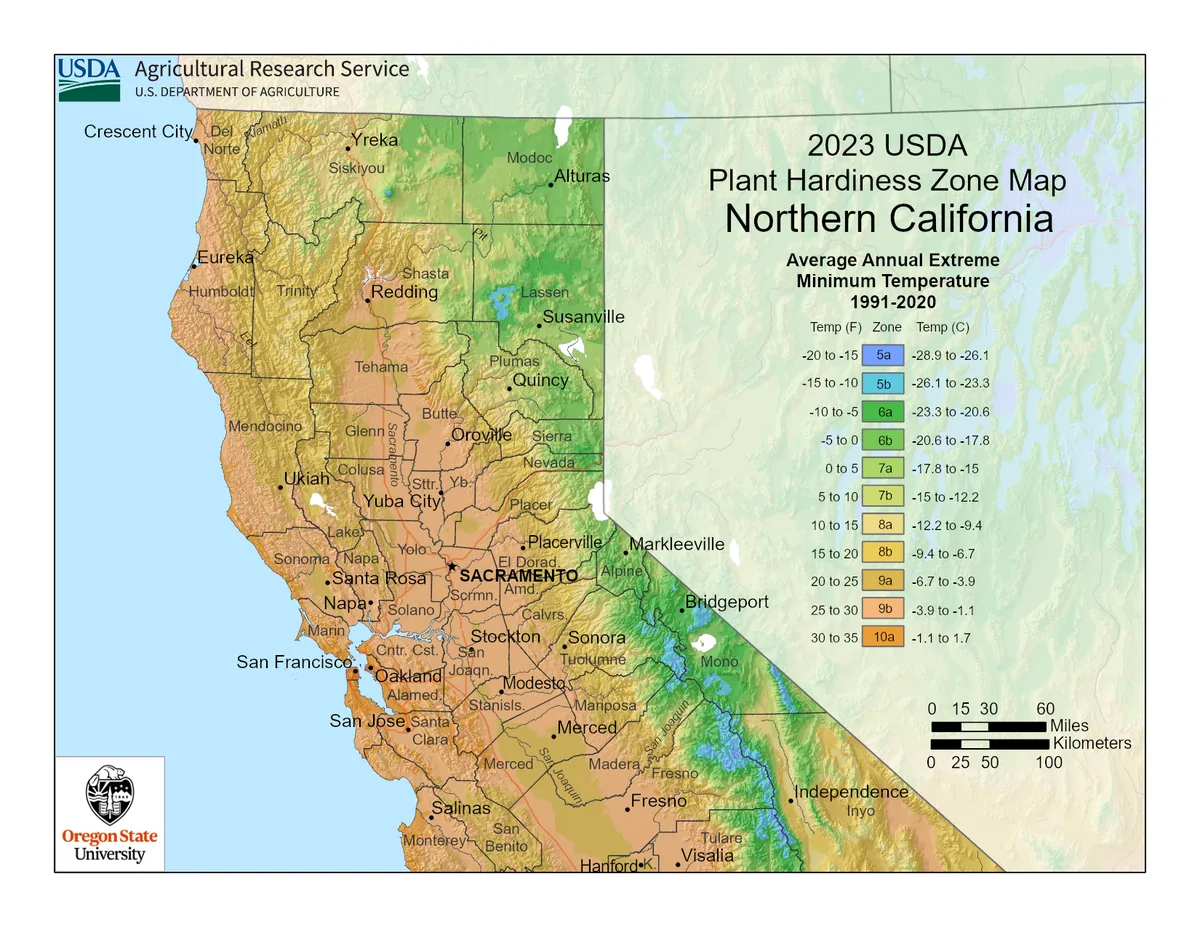

Official USDA Plant Hardiness Zone Map (2023), USDA Agricultural Research Service and Oregon State University PRISM Climate Group, shown reduced in size. Full-size files: USDA map downloads; interactive map: planthardiness.ars.usda.gov.
California counties by main zone
Each county is listed under the zone that covers most of its ZIP code area. Larger or hilly counties can span two or more zones.
Planting zone for every California county
| County | Main zone | Zones in county | Average coldest night | Last frost (50%) |
|---|---|---|---|---|
| Alameda | 9b | 9b, 10a, 10b | 25 to 30°F | Jan 2 |
| Alpine | 6b | 6b | -5 to 0°F | May 30 |
| Amador | 9b | 6b, 9a, 9b | 25 to 30°F | Mar 4 |
| Butte | 9b | 8b, 9a, 9b | 25 to 30°F | Mar 4 |
| Calaveras | 9a | 6b, 8b, 9a, 9b | 20 to 25°F | Jan 22 |
| Colusa | 9b | 9a, 9b | 25 to 30°F | Feb 14 |
| Contra Costa | 9b | 9b, 10a | 25 to 30°F | Jan 7 |
| Del Norte | 9b | 8a, 9b | 25 to 30°F | Mar 11 |
| El Dorado | 9b | 6b, 7a, 7b, 8b, 9a, 9b | 25 to 30°F | Mar 31 |
| Fresno | 9b | 5b, 7b, 8a, 9a, 9b | 25 to 30°F | Jan 30 |
| Glenn | 9b | 9a, 9b | 25 to 30°F | Feb 25 |
| Humboldt | 9b | 8b, 9a, 9b | 25 to 30°F | Feb 22 |
| Imperial | 10a | 9b, 10a | 30 to 35°F | Jan 4 |
| Inyo | 9a | 7a, 8a, 8b, 9a | 20 to 25°F | Apr 29 |
| Kern | 8b | 7b, 8a, 8b, 9a, 9b | 15 to 20°F | Jan 31 |
| Kings | 9a | 9a, 9b | 20 to 25°F | Feb 7 |
| Lake | 9a | 8b, 9a, 9b | 20 to 25°F | Apr 10 |
| Lassen | 7a | 6a, 6b, 7a | 0 to 5°F | May 16 |
| Los Angeles | 10a | 7b, 8a, 8b, 9a, 9b, 10a, 10b, 11a | 30 to 35°F | Jan 8 |
| Madera | 9a | 8a, 8b, 9a, 9b | 20 to 25°F | Feb 18 |
| Marin | 9b | 9b, 10a | 25 to 30°F | Jan 11 |
| Mariposa | 9a | 6a, 7a, 8a, 8b, 9a, 9b | 20 to 25°F | May 12 |
| Mendocino | 9a | 9a, 9b, 10a | 20 to 25°F | May 5 |
| Merced | 9a | 9a, 9b | 20 to 25°F | Mar 3 |
| Modoc | 6b | 6b, 7a | -5 to 0°F | Jun 3 |
| Mono | 6a | 6a, 6b, 7a | -10 to -5°F | Jun 10 |
| Monterey | 9b | 8b, 9a, 9b, 10a, 10b | 25 to 30°F | Feb 4 |
| Napa | 9b | 9a, 9b | 25 to 30°F | Feb 12 |
| Nevada | 9a | 6b, 7a, 8b, 9a, 9b | 20 to 25°F | Apr 14 |
| Orange | 10b | 10a, 10b | 35 to 40°F | Jan 5 |
| Placer | 9a | 6b, 7a, 8a, 8b, 9a, 9b | 20 to 25°F | Feb 25 |
| Plumas | 7b | 6b, 7a, 7b, 8a | 5 to 10°F | May 22 |
| Riverside | 9b | 8a, 8b, 9b, 10a, 10b | 25 to 30°F | Jan 31 |
| Sacramento | 9b | 9b | 25 to 30°F | Jan 12 |
| San Benito | 9a | 9a, 9b | 20 to 25°F | Feb 19 |
| San Bernardino | 9a | 7a, 7b, 8a, 8b, 9a, 9b, 10a | 20 to 25°F | May 5 |
| San Diego | 10a | 8a, 8b, 9a, 9b, 10a, 10b, 11a | 30 to 35°F | Jan 6 |
| San Francisco | 10b | 10a, 10b | 35 to 40°F | Dec 30 |
| San Joaquin | 9b | 9b | 25 to 30°F | Feb 6 |
| San Luis Obispo | 8b | 8b, 9a, 9b, 10a | 15 to 20°F | Jan 16 |
| San Mateo | 10a | 9b, 10a | 30 to 35°F | Dec 29 |
| Santa Barbara | 10a | 8b, 9a, 9b, 10a, 10b | 30 to 35°F | Apr 11 |
| Santa Clara | 9b | 9b, 10a | 25 to 30°F | Jan 2 |
| Santa Cruz | 9b | 9a, 9b, 10a | 25 to 30°F | Jan 29 |
| Shasta | 9a | 7a, 7b, 8a, 8b, 9a, 9b | 20 to 25°F | Mar 3 |
| Sierra | 6b | 6b, 7a, 8a, 8b, 9a | -5 to 0°F | Jun 11 |
| Siskiyou | 8a | 6b, 7b, 8a, 8b, 9a | 10 to 15°F | Apr 30 |
| Solano | 9b | 9b | 25 to 30°F | Jan 15 |
| Sonoma | 9b | 9a, 9b, 10a | 25 to 30°F | Feb 25 |
| Stanislaus | 9b | 9b | 25 to 30°F | Jan 31 |
| Sutter | 9b | 9b | 25 to 30°F | Jan 15 |
| Tehama | 9b | 7a, 7b, 9a, 9b | 25 to 30°F | Feb 22 |
| Trinity | 8b | 7b, 8b, 9a | 15 to 20°F | Apr 16 |
| Tulare | 9b | 6b, 7b, 8b, 9a, 9b | 25 to 30°F | Jan 23 |
| Tuolumne | 6a | 6a, 6b, 7a, 7b, 8a, 8b, 9a, 9b | -10 to -5°F | Apr 9 |
| Ventura | 8b | 7b, 8b, 9b, 10a, 10b | 15 to 20°F | Dec 31 |
| Yolo | 9b | 9a, 9b | 25 to 30°F | Feb 10 |
| Yuba | 9b | 8a, 9a, 9b | 25 to 30°F | Feb 11 |
When to plant in California: crop by crop
Planting dates for each crop in California, from the UC Master Gardener Program calendar.






California planting zone questions
What planting zone is California?
California has USDA plant hardiness zones 5b to 11a on the 2023 USDA map. The most common zone by county is 9b (26 of 58 counties), then 9a (13).
What does a hardiness zone mean?
A USDA zone is based on the average coldest winter night from 1991 to 2020. Each zone is 10°F wide, split into a and b halves of 5°F.
Did the zones change in 2023?
Yes. USDA released a new map in November 2023 using 1991 to 2020 data. Many places moved half a zone warmer than on the 2012 map.
Does my zone tell me when to plant?
No. Zones are about which perennials survive winter. Planting dates follow frost dates; see California frost dates and the California planting calendar.
How is a county's zone worked out here?
From the USDA 2023 zone of each ZIP code, joined to Census ZIP code areas. The main zone covers most of the county's ZIP code area.
Can I use the USDA map image?
USDA publishes the official map as a public-domain image. The map on this page is the official file, reduced in size, with a link to the full-size version.

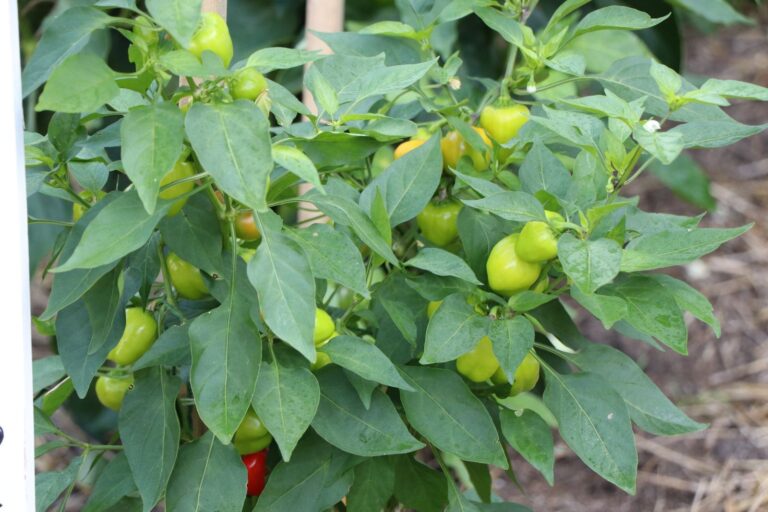
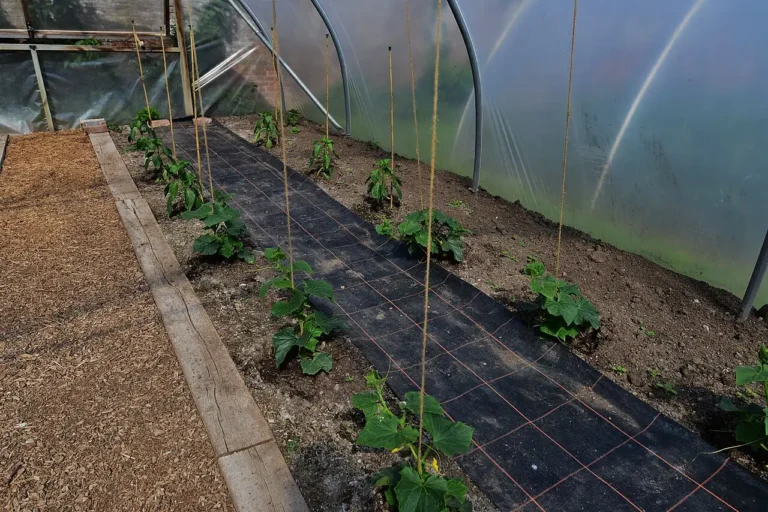
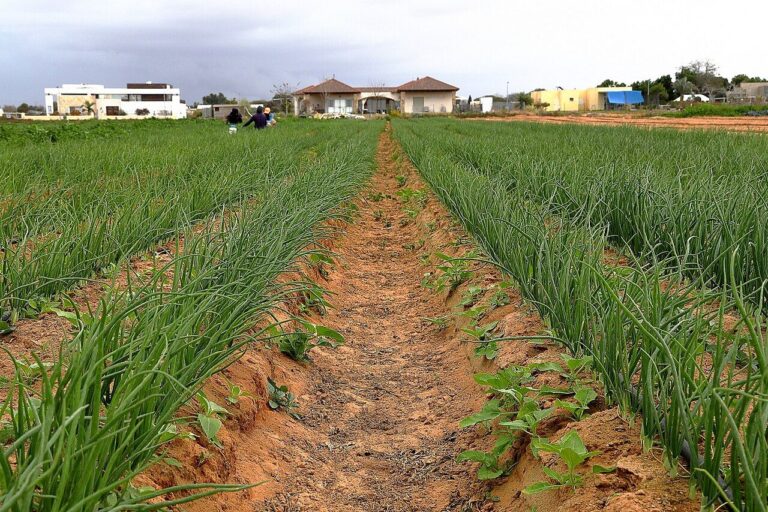
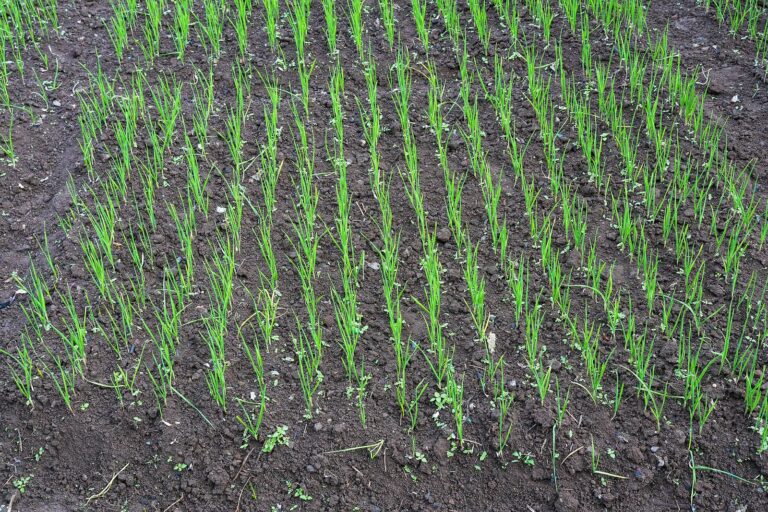
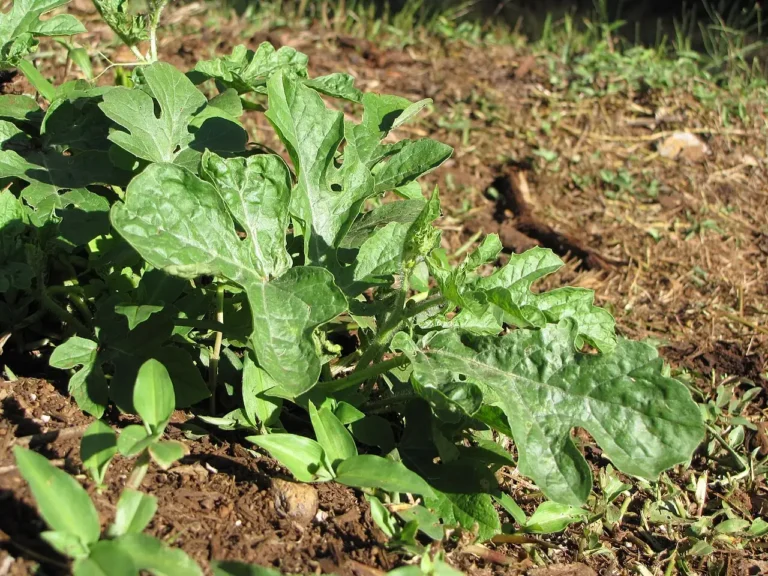
Photos: Rows of apple trees in white blossom along a grassy orchard alley: Philip Halling, CC BY-SA 2.0, via Wikimedia Commons; Mount Shasta rising over open land and Highway 97: Frank Schulenburg, CC BY-SA 4.0, via Wikimedia Commons; Rocky Pacific coast with a bridge and green headlands at Big Sur: dconvertini, CC BY-SA 2.0, via Wikimedia Commons; Sandy beach with a red rock outcrop beneath steep slopes at Big Sur: dconvertini, CC BY-SA 2.0, via Wikimedia Commons; Turquoise cove with a rocky point and surf on the Big Sur coast: dconvertini, CC BY-SA 2.0, via Wikimedia Commons; Pile of ripe tomatoes: Jubair Bin Iqbal, CC BY-SA 4.0, via Wikimedia Commons; Pepper plant in a kitchen garden loaded with green, yellow and red peppers: NPS, Public domain, via Wikimedia Commons; Potato plant growing in a garden bed: Kolforn (Kolforn), CC BY-SA 4.0, via Wikimedia Commons; Field of sweet corn in summer: Marathon, CC BY-SA 2.0, via Wikimedia Commons; Clusters of long green bean pods hanging from a climbing bean vine: Nirajan_pant, CC BY-SA 3.0, via Wikimedia Commons; Cucumber plants growing in a greenhouse bed: HARTLEPOOLMARINA2014, CC BY-SA 4.0, via Wikimedia Commons; Squash plant with yellow blossoms and spreading stems in a straw-mulched garden: Mary O'Neill, Public domain, via Wikimedia Commons; Young lettuce plant in garden soil: GT1976, CC BY-SA 4.0, via Wikimedia Commons; Long rows of green onion plants growing in sandy farm soil: ליזי שאנן, CC BY 2.5, via Wikimedia Commons; Neat rows of young garlic shoots growing in dark tilled soil: Timothy A. Gonsalves, CC BY-SA 4.0, via Wikimedia Commons; Pea plants growing up supports in a garden: Kolforn (Kolforn), CC BY-SA 4.0, via Wikimedia Commons; Young watermelon plant in a garden: Forest and Kim Starr, CC BY 3.0 us, via Wikimedia Commons.