Home › Tennessee › Soil testing
Tennessee
Tennessee Soil Testing
Home soil samples in Tennessee go to the UT Soil, Plant and Pest Center, run by University of Tennessee Institute of Agriculture. The page below shows the fee as printed ($15 for Soil pH and Nutrients (home soil sheet)) and the sampling steps from 8 official sources.
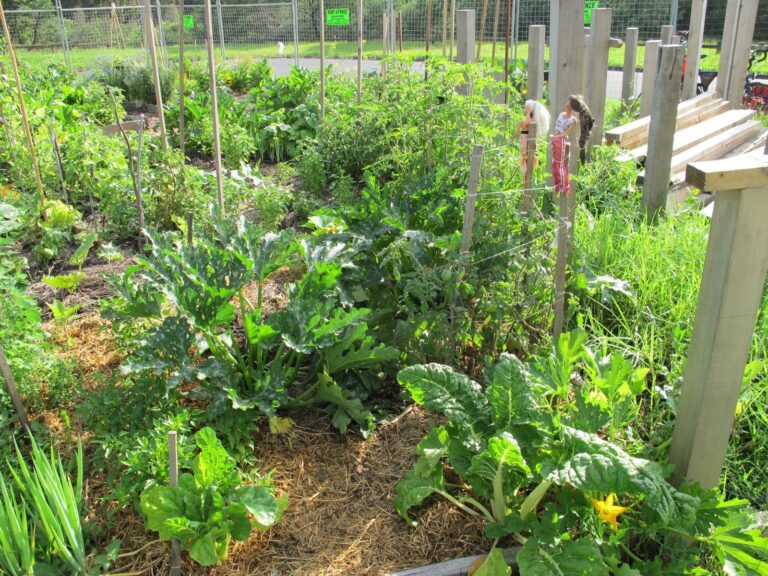
Photo: Community vegetable garden with chard, squash and staked tomato plants in summer. Gavin Anderson, CC BY-SA 2.0, via Wikimedia Commons
Where to get a soil test in Tennessee
| Lab | Address | Drop-off as printed | Online as printed | Turnaround as printed | Source |
|---|---|---|---|---|---|
| UT Soil, Plant and Pest Center University of Tennessee Institute of Agriculture (UT Extension) | 5201 Marchant Drive, Nashville, TN 37211 | Samples may be dropped off or shipped to the Nashville lab; after-hours and weekend dropoff just inside atrium. Sample boxes at county Extension offices; Anderson County office accepts drop-off with $20 (office-assisted). | Customer Portal to submit soil and forage samples and view results; online payment portal for paper submission sheets | Results should be e-mailed within 7 business days, of us receiving the sample. | Lawn and Garden Soil Samples |
Blank cells mean the source prints nothing for that column. Contact details can change; check the lab page before sending a sample.
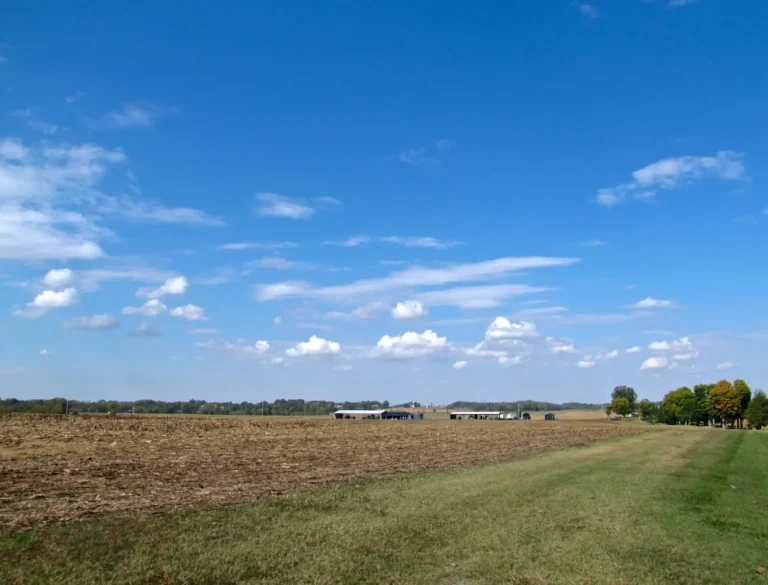
Open farm fields near Cedar Hill in Robertson County, Tennessee
Tennessee soil test prices
| Lab | Test | Fee as printed | Includes as printed | For | Source |
|---|---|---|---|---|---|
| UT Soil, Plant and Pest Center | Soil pH and Nutrients (home soil sheet) | $15 | Fertilizer and lime recommendations are included. | Home garden | Home Soil Submission Sheet 2026 |
| UT Soil, Plant and Pest Center | Nutrient test (2026 Fee Schedule) | $15.00; 20 to 39 samples $13.50; 40+ samples $12.00 | PH, buffer pH, Mehlich-1 extractable phosphorus, potassium, calcium, magnesium, zinc, manganese, iron, and boron; fertilizer and lime recommendations included | All | Brochure and Fees |
| UT Soil, Plant and Pest Center | Organic matter (combustion) | $15.00 | All | Brochure and Fees | |
| UT Soil, Plant and Pest Center | Soluble salts | $10.00 | Helpful after winter with salted driveways/sidewalks (home sheet) | All | Brochure and Fees |
| UT Soil, Plant and Pest Center | Texture (USDA) | $30.00 | Percent sand, silt and clay (home sheet) | Home garden | Brochure and Fees |
| UT Soil, Plant and Pest Center | Heavy metals | $40.00 (home sheet: Heavy Metal Screening $40) | Lead, arsenic, cadmium, chromium, and zinc; 14 business day turn around | Home garden | Home Soil Submission Sheet 2026 |
| UT Soil, Plant and Pest Center | Greenhouse Substrate/Potting Media routine | $35.00 | PH, soluble salts, ammonium, nitrate, phosphorus, potassium, calcium, and magnesium | Home garden | Brochure and Fees |
| UT Soil, Plant and Pest Center | Potting media / compost (home sheet) | $35 | For use with potting media or >75% compost filled raised/flower beds; need 1/2 gallon of soil | Home garden | Home Soil Submission Sheet 2026 |
| UT Soil, Plant and Pest Center | Soil sulfate; total carbon; total nitrogen | Soil sulfate $10.00; Total carbon $15.00; Total nitrogen $15.00 | All | Brochure and Fees | |
| UT Soil, Plant and Pest Center | Lawn or Plant diagnostic (pest diagnostics) | $30.00 | All | Brochure and Fees | |
| UT Soil, Plant and Pest Center | Basic (2007 PB1061, older fee) | $6 | PH, Buffer pH, P, K, Ca, Mg, calculated CEC and base saturation | All | Soil Testing |
| UT Soil, Plant and Pest Center | Basic Plus (2007 PB1061, older fee) | $15 | All the above, plus Zn, Mn, Fe, Na, B | All | Soil Testing |
| UT Soil, Plant and Pest Center | Basic soil test via county office (Anderson County) | $15 mailed with submission sheet, or $20 dropped off at office | PH and basic nutrients | Home garden | Soil Testing, Forage Analysis and Plant Pests |
| UT Soil, Plant and Pest Center | Homeowner lawn, ornamentals, fruit/vegetable garden (Robertson County) | $15.00 per sample | Complete fertilizer and lime recommendations returned | Home garden | Soil Test |
Fees are copied from the source and can change. Older publications can print different prices, so a test can appear in more than one row; the source list below gives each date.
How to take a soil sample in Tennessee
| Step | What the source says | Applies to | Source |
|---|---|---|---|
| How deep to sample | Sample 0 to 6 inches deep with probe or shovel. | Lawn | Soil Testing, Forage Analysis and Plant Pests |
| How deep to sample | For pH, P, K, micronutrients and organic matter, take soil samples to a depth of 6 inches. | All | Soil Testing |
| How many cores | About ten sub-samples comprising one sample from the area of interest. | All | Soil Testing, Forage Analysis and Plant Pests |
| How many cores | For lawns and gardens, soil portions should be collected at random from eight to 10 locations. | All | Soil Testing |
| Mixing the sample | Gather a shovel and bucket, randomly select about 10 locations, dig 6 inches, mix soil evenly in bucket, then place representative sample in bag or box. | All | Soil Testing, Forage Analysis and Plant Pests |
| Mixing the sample | Place portions in a clean container, mix thoroughly, then remove enough soil to fill a sample box. | All | Soil Testing |
| How much soil to send | Provide, at least, one heaping full cup of soil. If potting media or compost filled bed, 1/2 gallon. | All | Home Soil Submission Sheet 2026 |
| How much soil to send | We need at least one cup to have enough soil to test, two cups is safe. More is always better. | All | Home Soil Submission Sheet 2026 |
| How much soil to send | Soil nutrient test needs 2 cups; greenhouse/potting media 1/2 gallon. | All | Brochure and Fees |
| Container | Soil sample boxes can be picked up at your county Extension office. Sullivan County: or collect samples in quart-size zip lock bags. | All | Brochure and Fees |
| Container | Place submission sheet, samples and padding inside shipping box. Samples placed in envelopes or shipping bags will get destroyed in shipping. | All | Lawn and Garden Soil Samples |
| Labeling | Sample Name: such as 1,2,A,B, max 6 characters; Sample Description optional, max 10 characters. | All | Home Soil Submission Sheet 2026 |
| When to sample | Soils can be tested any time of year; fall is very desirable (drier soils, lab less rushed, lime applied well before spring planting). Sample at about the same time each year. | All | Soil Testing |
| When to sample | Recommended frequency: lawns, gardens and pasture crops every three to five years. | All | Soil Testing |
| Other sampling steps | Remove organic debris, rocks and trash from the soil surface before collecting. Soils should be dry enough to till; air-dry wet samples. | All | Soil Testing |
| Other sampling steps | Mix spots in a bucket to get an average of the lawn or garden. | All | Home Soil Submission Sheet 2026 |
| Other sampling steps | Heavy metals: sample within 10 feet of painted walls, or where the garden is going to be. | Garden | Home Soil Submission Sheet 2026 |
| Other sampling steps | Routine soil testing does not test for diseases, pesticides, compaction, or drainage problems. | All | Home Soil Submission Sheet 2026 |
Publications can disagree on depth and the number of cores, so each is its own row. Follow the lab you send the sample to.
Reading a Tennessee soil test report
| What the report or publication says | Source |
|---|---|
| Each nutrient tested is reported in pounds per acre and assigned a soil test rating. | Soil Testing |
| Phosphorus and potassium are rated low (L), medium (M), high (H) and very high (VH); secondary and micronutrients are sufficient (S) or deficient (D). | Soil Testing |
| For lawn and garden, recommendations are reported in pounds of actual fertilizer grades and agricultural limestone per 1,000 square feet; flowers per 10 and shrubs per 100 square feet. | Soil Testing |
| Mehlich No. 1 (Double Acid) extractant for nutrients and a Buffer for measuring lime requirements are used. | Soil Testing |
| Organic matter does not change the fertilizer recommendations; mostly used by landscape architects and contractors. | Home Soil Submission Sheet 2026 |
| Nitrogen is not tested in routine soil test but a nitrogen fertilizer recommendation is still provided (page links to info on soil nitrate testing). | Lawn and Garden Soil Samples |
| Garden lime recommendations use Lime Chart 4; sweet potatoes lime to pH 6.0 (chart 6) because the garden recommendation does not apply to Irish or sweet potatoes. | Lime and Fertilizer Recommendations for the Various Crops of Tennessee, Chapter |
| Soluble salts: sampling in late spring or summer is too late for winter salt damage; sample early. | Home Soil Submission Sheet 2026 |
pH targets as printed
| Crop or use | Range as printed | Source |
|---|---|---|
| Home vegetable garden (all crops having lime requirement) | lime to pH 6.5 | Lime and Fertilizer Recommendations for the Various Crops of Tennessee, Chapter |
| Sweet potatoes | lime requirement to pH 6.0 | Lime and Fertilizer Recommendations for the Various Crops of Tennessee, Chapter |
| Japanese Spruce and Periwinkle (ornamentals; sulfur if pH above) | above 6.0 triggers sulfur | Lime and Fertilizer Recommendations for the Various Crops of Tennessee, Chapter |
| Acid-loving shrubs (sulfur if pH above) | above 5.5 triggers sulfur | Lime and Fertilizer Recommendations for the Various Crops of Tennessee, Chapter |
Only what the sources print is shown. Where no pH target is printed for a crop, none is given here.
Tennessee soil testing: questions
How much does a soil test cost in Tennessee?
Soil pH and Nutrients (home soil sheet) at the UT Soil, Plant and Pest Center: $15, as printed by UT Institute of Agriculture, Soil, Plant and Pest Center. Other tests and older prices are in the fee table above.
How long does a soil test take in Tennessee?
The UT Soil, Plant and Pest Center prints: Results should be e-mailed within 7 business days, of us receiving the sample. Source: UT Institute of Agriculture, Soil, Plant and Pest Center.
How deep should I sample my lawn in Tennessee?
Sample 0 to 6 inches deep with probe or shovel. Source: UT/TSU Extension, Anderson County. Other sources print different depths, as shown above.
Where do these Tennessee soil testing facts come from?
Only UT Extension, state agency and other official pages are used, listed with dates below. Nothing here comes from private lab advertising, nurseries, news or blogs. Items no source prints are left out, not filled in.
Sources for Tennessee soil testing
- Brochure and Fees, UT Institute of Agriculture, Soil, Plant and Pest Center. Date: 2026 Fee Schedule (page undated). Read November 18, 2026.
- Lawn and Garden Soil Samples, UT Institute of Agriculture, Soil, Plant and Pest Center. Date: no date printed. Read November 18, 2026.
- Home Soil Submission Sheet 2026, UT Institute of Agriculture, Soil, Plant and Pest Center. Date: 2026 (PDF uploaded 2025/11). Read November 18, 2026.
- Soil Testing, University of Tennessee Extension, PB1061. Date: 05/07 (Rev), printed PB1061-5/07(Rev). Read November 18, 2026.
- Lime and Fertilizer Recommendations for the Various Crops of Tennessee, Chapter, University of Tennessee (BEES Info #100), BEES Info #100. Date: Revised: Sept., 2008. Read November 18, 2026.
- Lime and Fertilizer Recommendations for the Various Crops of Tennessee, Chapter, University of Tennessee (BEES Info #100), BEES Info #100. Date: Reviewed and/or Revised: September, 2008. Read November 18, 2026.
- Soil Testing, Forage Analysis and Plant Pests, UT/TSU Extension, Anderson County. Date: no date printed. Read November 18, 2026.
- Soil Test, UT/TSU Extension, Robertson County. Date: no date printed. Read November 18, 2026.
Only extension services and other official agencies are used.
More for Tennessee: Tennessee gardening, lawn care calendar, what to plant now and planting zones.
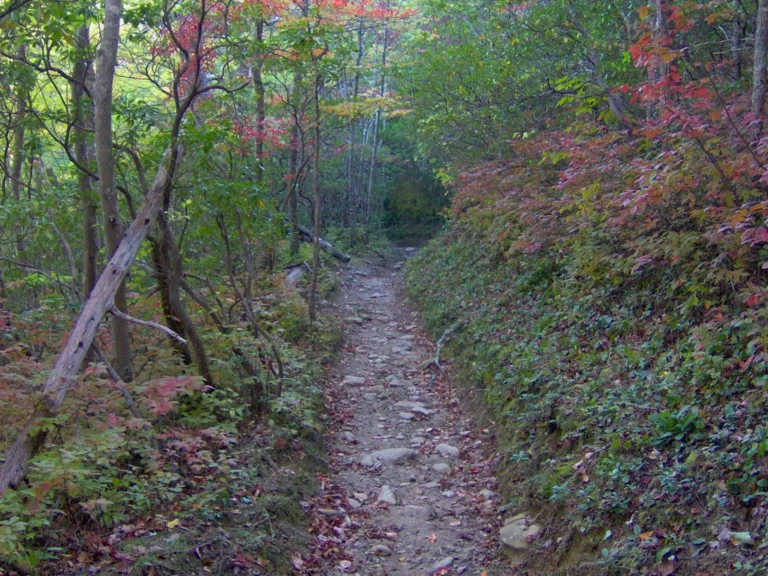
Photos: Community vegetable garden with chard, squash and staked tomato plants in summer: Gavin Anderson, CC BY-SA 2.0, via Wikimedia Commons; Early fall foliage along the Russell Field Trail in the Great Smoky Mountains, Tennessee: Brian Stansberry, CC BY 3.0, via Wikimedia Commons; Open farm fields near Cedar Hill in Robertson County, Tennessee: Brian Stansberry, CC BY 4.0, via Wikimedia Commons.