
Home › Gear › Soil Test Kits and State Soil Labs
Garden gear
Soil Test Kits and State Soil Labs
A lab soil test from your state's soil lab costs $6 to $15 per sample in the states covered here (North Carolina's is free outside peak season), and the report says how much lime or fertilizer to add. This guide lists the official labs and 11 kits and amendments checked on 12 Nov 2026.
Photo: Hand holding a sample of dark crumbly soil beside rows of soybean plants. USDA NRCS South Dakota, CC BY-SA 2.0, via Wikimedia Commons
Where to get a soil test in your state
| State | Official lab | Price as published | How to send a sample |
|---|---|---|---|
| Tennessee | UT Soil, Plant and Pest Center | $15 per sample | Pick up a sample box at your county Extension office, then mail or drop off the sample, information sheet and payment at 5201 Marchant Drive, Nashville, TN 37211. |
| Georgia | Agricultural and Environmental Services Laboratories (AESL) | $6 per sample for the routine S1 test; a $20 kit with a prepaid mailer is also sold | Take the sample to your UGA Extension county office for bags, forms and fees, or send it straight to the lab in Athens with the form or the $20 kit. |
| North Carolina | NCDA&CS Agronomic Services Division, Soil Testing | Free for NC residents outside peak season; $5 per sample in peak season, which starts December 1, 2026 (samples must reach the lab by 5:00 PM November 30 to be free) | Deliver or ship to 4300 Reedy Creek Rd, Raleigh, mail it to the Division, or ask your county NC State Extension office, which may carry samples to the lab. |
| Texas | Soil, Water and Forage Testing Laboratory | $12 per sample for the routine urban and homeowner test; results by email free, mailed copy $3 | Mail the bagged sample with the Urban and Homeowner Soil Sample Information Form and payment to the lab in College Station, or use the online form. |
| Pennsylvania | Agricultural Analytical Services Laboratory (AASL) | $10 for the standard soil test kit (form, bag and return mailer) | Buy a kit from a Penn State Extension county office or a garden center that stocks them and mail it to the lab at University Park. |
| Ohio | No statewide Ohio State lab for garden samples | Varies by lab | OSU fact sheet ANR-0107 lists labs that accept samples and says to check each lab for prices; some county Extension offices run their own soil testing programs (Delaware County: $25 per sample). |
From each lab’s official page, checked 12 Nov 2026. Free for NC residents outside peak season; $5 per sample in peak season, which starts December 1, 2026 (samples must reach the lab by 5:00 PM November 30 to be free). Ohio: OSU fact sheet ANR-0107 lists labs that accept samples and says to check each lab for prices; some county Extension offices run their own soil testing programs (Delaware County: $25 per sample). Delaware County program.
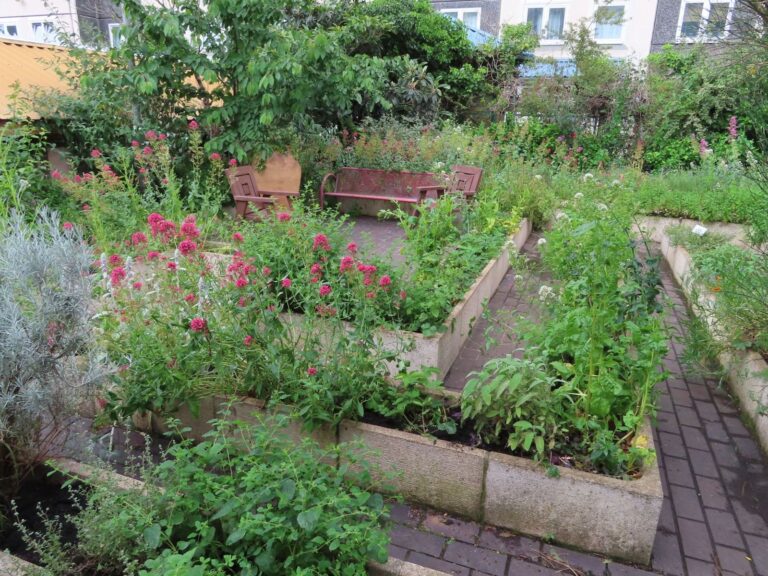
Community vegetable area with brick paths, timber beds and flowering plants
What you need
A lab test first
State soil labs report pH and nutrients with lime and fertilizer amounts for what you grow.
A clean bucket and trowel or probe
Take several cores across the bed or lawn, mix them in a clean plastic bucket and send a cup or so.
Home kits
Color-chart kits test pH, nitrogen, phosphorus and potassium at home; mail-in kits send the sample to a private lab.
Lime to raise pH
Garden and lawn lime, at the rate the report gives.
Sulfur to lower pH
Elemental sulfur or a soil acidifier, at the rate the report gives.
Organic matter
Bagged compost to work into beds.
11 products checked on 12 Nov 2026
Home test kits
Luster Leaf Rapitest Soil Test Kit 1601X
40 tests: 10 each for pH, nitrogen, phosphorus and potassium.
Mosser Lee Soil Master Soil Test Kit ML1210
Tests pH, nitrogen, phosphorus and potassium, 10 tests each.
Mail-in lab kits
MySoil Soil Test Kit MS0001
Mail-in kit; the lab reports nutrients and pH with recommendations for lawn, garden, trees or containers.
SOILKIT Soil Testing Kit with Lab Results
Lab analysis of pH, nitrogen, phosphorus, potassium, organic matter and micronutrients.
Sampling
AMS 7/8 x 21 in Soil Probe with Handle
21 in probe with a sample window and a 10 in cross handle.
Leaktite 5 Gallon Food Grade Bucket
5 gallon white bucket with a carry handle, for mixing soil cores.
Raising pH (lime)
Espoma Organic Garden Lime, 5 lb
5 lb bag of pelletized dolomitic limestone.
Pennington Fast Acting Lime, 30 lb
30 lb bag; the label rate covers 5,000 sq ft.
Lowering pH (sulfur)
Espoma Organic Soil Acidifier, 6 lb
6 lb bag with sulfur and gypsum.
Earth Science Fast Acting Sulfur, 2.5 lb
2.5 lb bag; the label rate covers 500 sq ft.
Organic matter
Back to the Roots Organic Compost, 1 cu ft
1 cu ft bag made from green waste and forest fines, no manure.
Prices are as listed on the linked store page on 12 Nov 2026 and change often. Amazon buttons are affiliate links: State Gardening may earn a commission at no cost to you. See the affiliate disclosure.
Soil Test Kits and State Soil Labs: questions
How much does a soil test cost in Tennessee?
$15 per sample at the UT Soil, Plant and Pest Center (2026 fee schedule). Sample boxes are at county Extension offices.
How much does a soil test cost in Georgia?
$6 per sample for the routine test at UGA's AESL lab through a county Extension office, or a $20 kit with a prepaid mailer.
Is soil testing free in North Carolina?
For NC residents it is free outside peak season. Peak season starts December 1, 2026, with a $5 fee per sample; samples at the lab by 5:00 PM November 30 are free.
How much does a soil test cost in Texas?
$12 per sample for the Texas A&M AgriLife routine urban and homeowner test, prices valid through 2026.
Where do I get a soil test in Pennsylvania?
Penn State's lab sells a $10 kit through county Extension offices and some garden centers.
Where do I get a soil test in Ohio?
Ohio State Extension fact sheet ANR-0107 lists labs that accept samples; some county offices run their own programs, such as Delaware County at $25 per sample.
Are home soil test kits accurate enough?
Home kits give a quick pH and N-P-K reading. The state labs report exact lime and fertilizer amounts, which home kits do not.
More gear guides

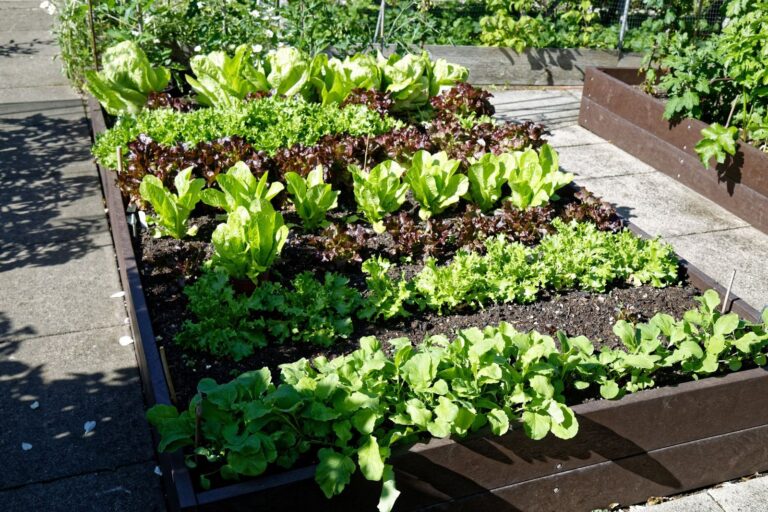
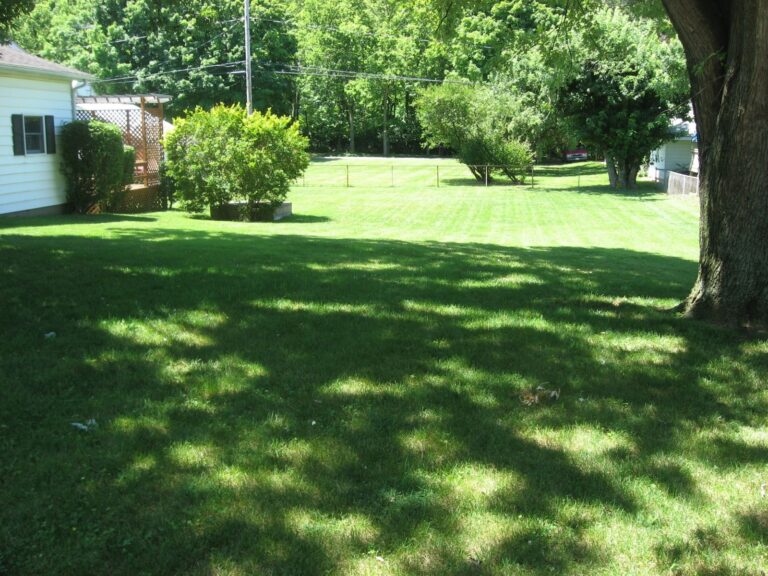
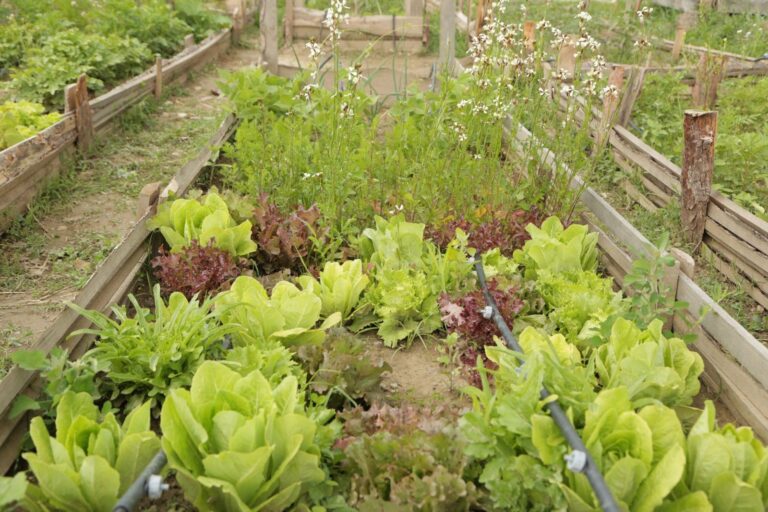
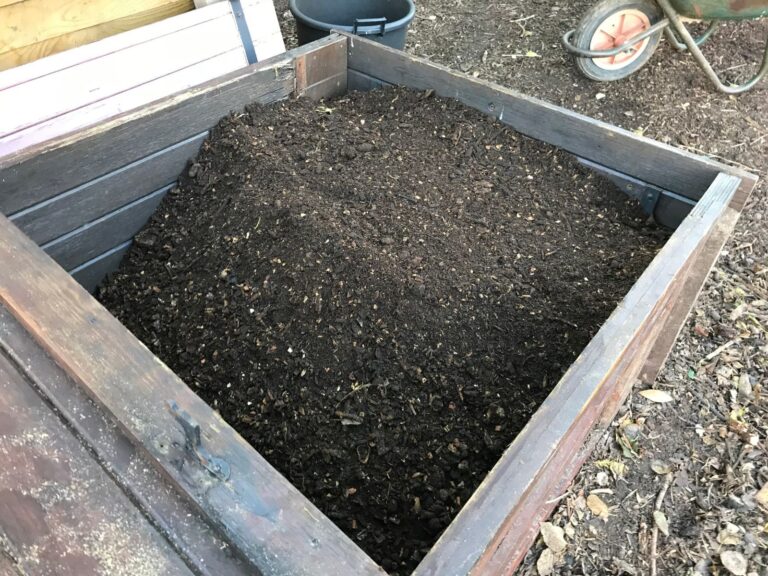
Photos: Hand holding a sample of dark crumbly soil beside rows of soybean plants: USDA NRCS South Dakota, CC BY-SA 2.0, via Wikimedia Commons; Dark finished compost filling a wooden compost bin in a garden: Bernard Dejean, CC BY-SA 4.0, via Wikimedia Commons; Community vegetable area with brick paths, timber beds and flowering plants: David Hawgood, CC BY-SA 2.0, via Wikimedia Commons; Hand lifting tomato seedlings with roots from a seed tray for transplanting: Dwight Sipler from Stow, MA, USA, CC BY 2.0, via Wikimedia Commons; Raised wooden vegetable bed planted with rows of lettuce and salad greens: Acabashi, CC BY-SA 4.0, via Wikimedia Commons; Shaded green lawn behind a house with shrubs and mature trees on a summer day: Nyttend, Public domain, via Wikimedia Commons; Rows of green and red lettuce growing in wooden-edged beds with drip irrigation: SA, The Green Ark, Bostanie, CC BY 4.0, via Wikimedia Commons.