Ohio
Ohio Soil Testing
Ohio has no public OSU Extension lab for routine home soil tests. This page lists 8 lab or testing options that Ohio State University Extension publications name, with the sampling steps and pH targets those publications print, each with its source.
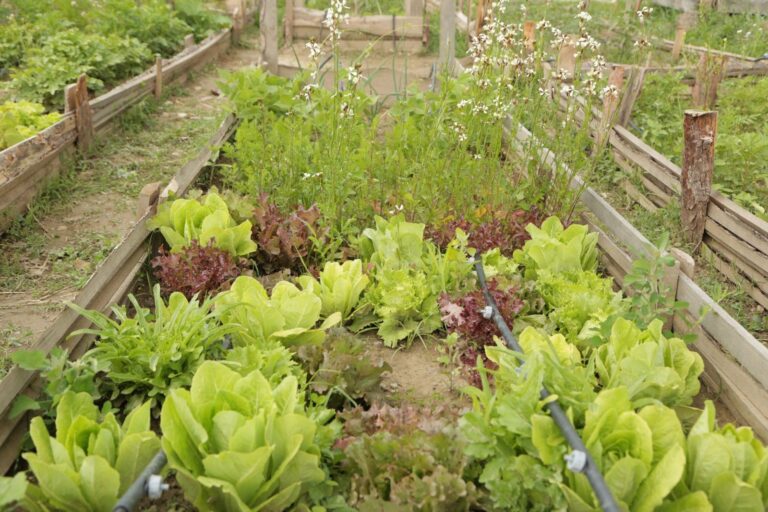
Photo: Rows of green and red lettuce growing in wooden-edged beds with drip irrigation. SA, The Green Ark, Bostanie, CC BY 4.0, via Wikimedia Commons
Who tests soil in Ohio
| Lab | Address | Drop-off as printed | Online as printed | Turnaround as printed | Source |
|---|---|---|---|---|---|
| OSU CFAES Soil, Water, and Environmental Lab (SWEL) The Ohio State University, CFAES | Chelsea Whitacre, 409 Kottman Hall, 2021 Coffey Rd, Columbus, OH 43210 | Samples received first week of each month, results delivered by end of the month | Urban Agriculture | ||
| (No public OSU routine lab for homeowners) OSU Extension | Some OSU Extension offices have pre-paid soil test kits available | Soil Testing for Horticultural Needs | |||
| Medina County Extension pre-paid kit and SWCD drop-off OSU Extension Medina County / Medina County Soil and Water Conservation District | OSU Extension, 4046 Medina Rd., Medina, OH 44256 | Extension sells $15 kit; SWCD (6090 Wedgewood Rd) takes 2 cups of soil, $20.00 per sample, and mails to lab | Testing Soil, Hay, Water, or Plants for Issues | ||
| A&L Great Lakes Laboratories Private/university lab listed by OSU Extension (listing only) | 3505 Conestoga Drive, Fort Wayne, IN 46808 | Soil Testing for Horticultural Needs | |||
| Calmar Soil Testing Labs Private/university lab listed by OSU Extension (listing only) | 130 South State St, Westerville, OH 43081 | Soil Testing for Horticultural Needs | |||
| Logan Labs, LLC Private/university lab listed by OSU Extension (listing only) | 620 North Main Street, P.O. Box 326, Lakeview, OH 43331-0326 | Soil Testing for Horticultural Needs | |||
| Spectrum Analytic, Inc. Private/university lab listed by OSU Extension (listing only) | 1087 Jamison Rd NW, Washington Court House, OH | Soil Testing for Horticultural Needs | |||
| Penn State Agricultural Analytical Services Laboratory Private/university lab listed by OSU Extension (listing only) | 720 Tower Rd, University Park, PA 16802 | Soil Testing for Horticultural Needs |
Blank cells mean the source prints nothing for that column. Contact details can change; check the lab page before sending a sample.

Soil testing costs for Ohio gardeners
| Lab | Test | Fee as printed | Includes as printed | For | Source |
|---|---|---|---|---|---|
| OSU CFAES Soil, Water, and Environmental Lab (SWEL) | Heavy metal screening (As, Pb, Cd) | $18/ sample | As, Pb, Cd | All | Urban Agriculture |
| OSU CFAES Soil, Water, and Environmental Lab (SWEL) | Heavy metal + organic matter, pH, and nutrients | $33/sample | As, Pb, Cd plus organic matter, pH, P, Ca, K | All | Urban Agriculture |
| Medina County Extension pre-paid kit and SWCD drop-off | Basic lab test (kit sold at OSU Extension Medina) | $15 per test | Basic lab test; shipping not included | Home garden | Testing Soil, Hay, Water, or Plants for Issues |
| Medina County Extension pre-paid kit and SWCD drop-off | SWCD drop-off and mail-in processing | $20.00 per sample | Bring 2 cups of soil in ziplock; SWCD processes and mails to lab | Home garden | Testing Soil, Hay, Water, or Plants for Issues |
Fees are copied from the source and can change. Older publications can print different prices, so a test can appear in more than one row; the source list below gives each date.
How Ohio labs ask you to sample
| Step | What the source says | Applies to | Source |
|---|---|---|---|
| How deep to sample | New turfgrass seeding or sodding: 6-7 inches. Established turfgrass: 4-5 inches. | Lawn | Soil Testing for Horticultural Needs |
| How deep to sample | Flower bed and vegetable garden samples 6-8 inches; sample between vegetable rows to avoid fertilizer bands. | Garden | Soil Testing for Horticultural Needs |
| How deep to sample | Tree and shrub samples 6-10 inches. | Trees | Soil Testing for Horticultural Needs |
| How deep to sample | 2016 version: root depth typically 5 to 8 inches for trees, shrubs, flowerbeds and vegetable gardens, and 3 to 4 inches for lawns (conflicts with 2025 depths). | All | Soil Testing for Ohio Lawns, Landscapes, Fruit Crops, and Vegetable Gardens |
| How many cores | 5 to 10 subsamples for small areas such as flowerbeds; 10 to 15 for larger areas such as lawns; zigzag pattern, same depth and volume. | All | Soil Testing for Horticultural Needs |
| Mixing the sample | Composite of subsamples mixed; allow soil to dry before mixing. | All | Soil Testing for Horticultural Needs |
| Mixing the sample | Break up lumps and air dry on parchment or butcher paper at room temperature, no artificial heat; not newspaper or colored paper; crush to wheat-grain size. | All | Soil Testing for Ohio Lawns, Landscapes, Fruit Crops, and Vegetable Gardens |
| How much soil to send | About 1 pint of the composite sample is sent to the lab. | All | Soil Testing for Horticultural Needs |
| Container | Collect in a clean plastic bucket; never metal buckets (zinc, aluminum, rust can contaminate). | All | Soil Testing for Horticultural Needs |
| Labeling | Form numbers must match bag numbers; fill out plant types or no recommendations are given. | All | Soil Testing for Horticultural Needs |
| When to sample | Samples can be taken any time the soil is workable; fall best for applying lime, spring for sulfur. | All | Soil Testing for Horticultural Needs |
| When to sample | Test sandy soils every 2-3 years, clay soils every 3-4 years. | All | Soil Testing for Horticultural Needs |
| Other sampling steps | Remove surface organic matter (mulch, thatch, plants, organic layer of 1 inch or less) and roots; test separately for lawn, vegetable garden, trees/shrubs, differing soils. | All | Soil Testing for Horticultural Needs |
| Other sampling steps | Medina Extension office lends a soil probe; $50 refundable deposit. | All | Testing Soil, Hay, Water, or Plants for Issues |
Publications can disagree on depth and the number of cores, so each is its own row. Follow the lab you send the sample to.
Soil pH and lime guidance for Ohio
| What the report or publication says | Source |
|---|---|
| Nutrient levels reported in parts per million (ppm), equivalent to lb/acre; most labs give a graphic of levels. | Soil Testing for Horticultural Needs |
| Results and fertilizer recommendations usually emailed or mailed in two weeks, depending on lab. | Soil Testing for Horticultural Needs |
| Standard test: pH, CEC and P, K, Ca, Mg; micronutrients, texture, soluble salts (EC) cost extra at most labs. | Soil Testing for Horticultural Needs |
| Soluble salts: many fruits, vegetables, flowers can show salt toxicity at 2 dS/m. | Soil Testing for Horticultural Needs |
| Ohio soil-testing labs are not regulated by state or federal agencies; voluntary NAPT or ALP proficiency programs exist. | Choosing a Soil Testing Laboratory |
| Labs are not obligated to use university fertilizer/lime recommendations; choose a lab following NCERA-13. | Choosing a Soil Testing Laboratory |
| Heavy metals concern on urban or reclaimed soils or areas where lead-based paint may have been used. | Choosing a Soil Testing Laboratory |
| SWEL recommends heavy metal screening for urban, industrial, sites within 10 feet of a pre-1960 structure, or unknown history. | Urban Agriculture |
| OSU list inclusion is not endorsement; contact lab for current pricing and tests. | Soil Testing for Horticultural Needs |
pH targets as printed
| Crop or use | Range as printed | Source |
|---|---|---|
| Most deciduous shade trees, conifers, turfgrasses, flowers, ornamental shrubs, vegetables, fruit trees | 6.1 to 6.9 | Soil Testing for Horticultural Needs |
| Ericaceae (azaleas, blueberries, heathers, hollies, mountain laurel, rhododendrons) | 4.5 and 6.0 | Soil Testing for Horticultural Needs |
| Most turfgrasses, flowers, ornamental shrubs, vegetables, fruits (2016 version) | 6.1 to 6.9 | Soil Testing for Ohio Lawns, Landscapes, Fruit Crops, and Vegetable Gardens |
Only what the sources print is shown. Where no pH target is printed for a crop, none is given here.
Ohio soil testing: questions
Does Ohio have a state lab for home soil tests?
Ohio State University Extension publications say there is no routine home lab at OSU and list private and out-of-state labs instead. The lab table above shows each as the publication lists it.
How far down should a Ohio soil sample go?
New turfgrass seeding or sodding: 6-7 inches. Established turfgrass: 4-5 inches. Source: The Ohio State University, CFAES (OSU Extension). Other sources print different depths, as shown above.
Who wrote the Ohio soil testing information?
Only Ohio State University Extension, state agency and other official pages are used, listed with dates below. Nothing here comes from private lab advertising, nurseries, news or blogs. Items no source prints are left out, not filled in.
Ohio soil lab and sampling sources
- Soil Testing for Horticultural Needs, The Ohio State University, CFAES (OSU Extension), HYG-1132. Date: May 20, 2025. Read November 18, 2026.
- Soil Testing for Ohio Lawns, Landscapes, Fruit Crops, and Vegetable Gardens, Ohio State University Extension, HYG-1132. Date: 07/28/2016. Read November 18, 2026.
- Choosing a Soil Testing Laboratory, OSU Extension Auglaize County. Date: no date printed. Read November 18, 2026.
- Testing Soil, Hay, Water, or Plants for Issues, OSU Extension Medina County. Date: no date printed. Read November 18, 2026.
- Urban Agriculture, OSU CFAES Soil, Water, and Environmental Lab. Date: no date printed. Read November 18, 2026.
Only extension services and other official agencies are used.
More for Ohio: Ohio gardening, lawn care calendar, what to plant now and planting zones.
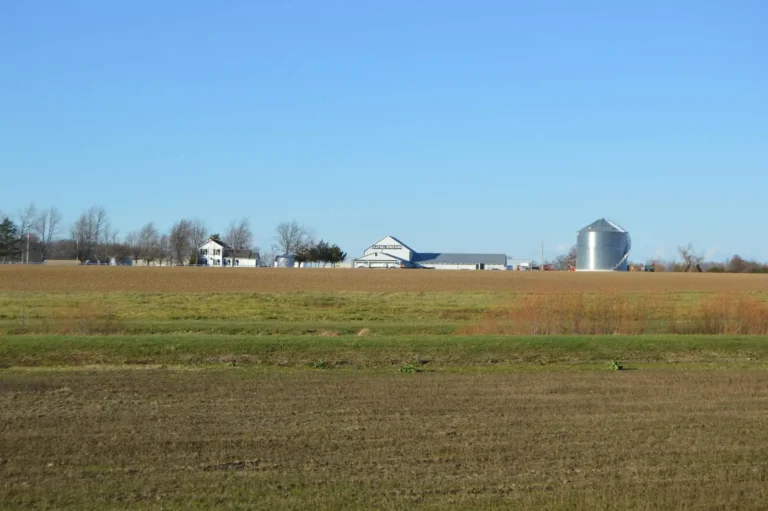
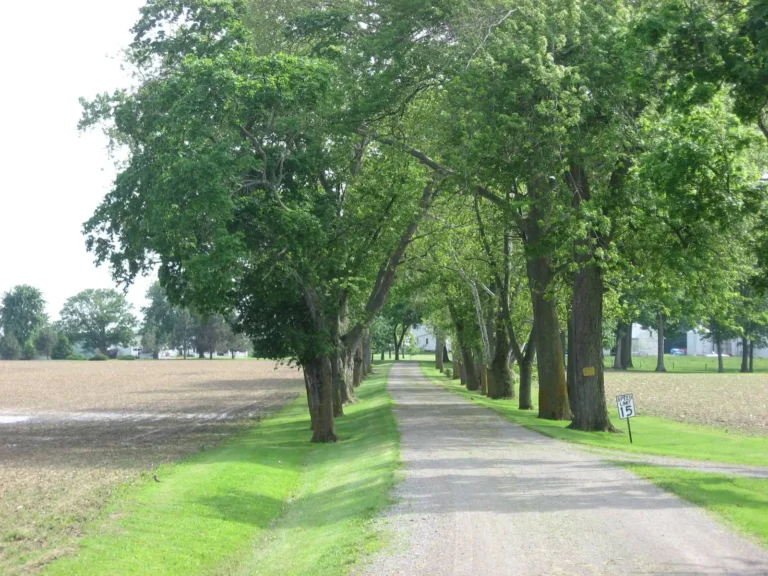
Photos: Rows of green and red lettuce growing in wooden-edged beds with drip irrigation: SA, The Green Ark, Bostanie, CC BY 4.0, via Wikimedia Commons; Open fields under a gray sky southwest of Sidney, Shelby County: Nyttend, Public domain, via Wikimedia Commons; Flat fields and farmstead beside Blue Creek near Broughton, Paulding County: Nyttend, Public domain, via Wikimedia Commons; Hill pastures and a pond below wooded ridges, Morgan County: Nyttend, Public domain, via Wikimedia Commons; Tree-lined farm lane between fields east of Morral, Marion County: Nyttend, Public domain, via Wikimedia Commons.