Home › Tennessee › Pruning and bulbs
Tennessee
Tennessee Pruning and Bulb Timing
This page lists 60 pruning timing entries and 34 bulb timing entries for Tennessee from 15 official publications of UT Extension and other official sources. Each row shows the timing as the publication prints it, with its source.
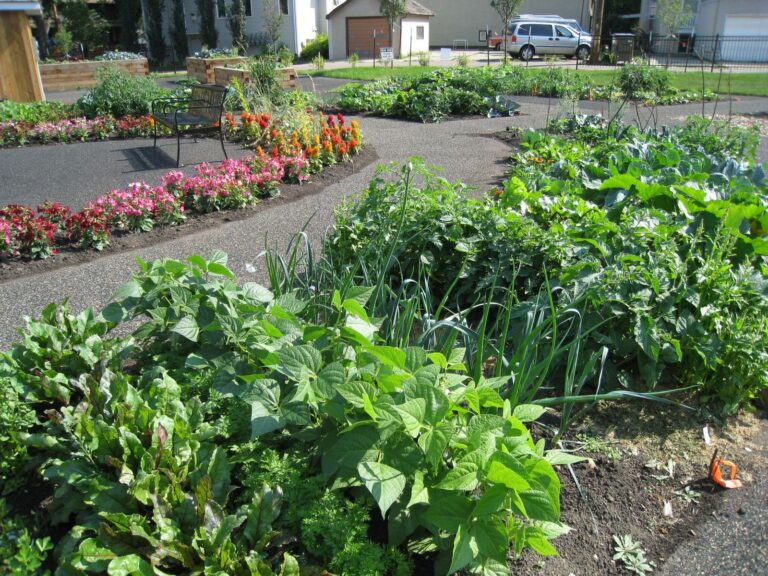
Photo: Community garden plots of beans, onions and greens beside flower borders and paths. Mack Male from Edmonton, AB, Canada, CC BY-SA 2.0, via Wikimedia Commons
When to prune in Tennessee
Type in the box to filter the table.
Trees
| Plant | Timing as printed | What to cut, as printed | Source |
|---|---|---|---|
| Birch, elm, maple and yellowwood (bleeders) | Late winter | Avoid: If pruned in spring, the flow of sap will stain tree bark and attract pest insects. | Best Management Practices for Pruning Landscape Trees, Shrubs and Ground Covers |
| Bradford ornamental pear Pyrus calleryana | Late winter (major cuts); after flowering (light) | Best Management Practices for Pruning Landscape Trees, Shrubs and Ground Covers | |
| Crabapple Malus spp. | When fully dormant | Remove suckers and shape; young suckers can be removed during the growing season. | Best Management Practices for Pruning Landscape Trees, Shrubs and Ground Covers |
| Crape myrtle Lagerstroemia | February, before new growth starts | Trim off last year's flower heads; cut crossing branches and branches with narrow angles of less than 30 degrees. | Proper Crape Myrtle Pruning |
| Crapemyrtle Lagerstroemia spp. | Late winter or early spring, before new growth starts | Thin to form; for small trees keep three or four main stems and cut side branches to desired height. | Best Management Practices for Pruning Landscape Trees, Shrubs and Ground Covers |
| Dogwood Cornus spp. | Late winter (major cuts); after flowering (light) | Best Management Practices for Pruning Landscape Trees, Shrubs and Ground Covers | |
| Fir and spruce Abies spp.; Picea spp. | Early spring before growth begins | To shorten a leader, cut it back by about one-half; leave a few buds near the end. | Best Management Practices for Pruning Landscape Trees, Shrubs and Ground Covers |
| Flowering almond and cherry Prunus spp. | Lightly after bloom | Remove suckers or develop desired shape. | Best Management Practices for Pruning Landscape Trees, Shrubs and Ground Covers |
| Maples Acer spp. | Late winter for major cuts; midsummer for light pruning | Avoid: Avoid early spring pruning because unsightly sap will flow from the pruning cuts. | Best Management Practices for Pruning Landscape Trees, Shrubs and Ground Covers |
| Pine Pinus spp. | As the candles expand in the spring | Cut new growth candles by about 50 percent; pinch by hand. Avoid: Pruning shears damage the surrounding needles. | Best Management Practices for Pruning Landscape Trees, Shrubs and Ground Covers |
Shrubs
| Plant | Timing as printed | What to cut, as printed | Source |
|---|---|---|---|
| Azalea Rhododendron spp. | Immediately after flowering | Don't prune if the plant looks good; pinch tips for a more compact plant. | Best Management Practices for Pruning Landscape Trees, Shrubs and Ground Covers |
| Butterfly bush Buddleia spp. | Late winter or early spring, before new growth starts | Remove individual stems from inside the plant; head back new growth. | Best Management Practices for Pruning Landscape Trees, Shrubs and Ground Covers |
| Chastetree Vitex spp. | Late winter or early spring, before new growth starts | Remove individual stems from inside; head back new growth. Flowers on new wood. | Best Management Practices for Pruning Landscape Trees, Shrubs and Ground Covers |
| Forsythia Forsythia spp. | Immediately after flowering | Remove about one-third of the older stems at ground level every couple of years. | Best Management Practices for Pruning Landscape Trees, Shrubs and Ground Covers |
| Hydrangea, bigleaf (major pruning) Hydrangea macrophylla | After blooms fade but no later than the end of July | For size reduction or shaping. Avoid: Pruning during winter or spring can prevent flowering because bigleaf buds form in late summer and fall. | A Tennessee Landscape Contractor’s Guide to Hydrangeas |
| Hydrangea, bigleaf (rejuvenation) Hydrangea macrophylla | Early spring | Once mature, remove a few (no more than one-third) of the older branches to the base; rejuvenates without large loss of flowers. | A Tennessee Landscape Contractor’s Guide to Hydrangeas |
| Hydrangea, bigleaf and oakleaf (table entry) Hydrangea macrophylla, H. quercifolia | Immediately after flowering | Remove older branches; head back new growth to produce more lateral shoots as needed. | Best Management Practices for Pruning Landscape Trees, Shrubs and Ground Covers |
| Hydrangea, hills-of-snow and Pee-Gee (table entry) Hydrangea arborescens, H. paniculata | Late winter or early spring, before new growth starts | Prune to maintain form for summer flowering; head back new growth on Pee-Gee types. | Best Management Practices for Pruning Landscape Trees, Shrubs and Ground Covers |
| Hydrangea, oakleaf Hydrangea quercifolia | Finish by the end of July | Grow in natural form and prune as little as possible; flowers are produced on old wood. | A Tennessee Landscape Contractor’s Guide to Hydrangeas |
| Hydrangea, panicle Hydrangea paniculata | Once plants go dormant through early March | Not necessary; cutting hard to about two buds can tidy and increase bloom size and number. Blooms form on new stems. | A Tennessee Landscape Contractor’s Guide to Hydrangeas |
| Hydrangea, smooth Hydrangea arborescens | By early March | Blooms on current year's growth; needs time to grow stems and form flower buds. | A Tennessee Landscape Contractor’s Guide to Hydrangeas |
| Lilac Syringa spp. | Immediately after flowering | Prune out suckers and old flower clusters before seeds develop; remove old wood every couple of years. | Best Management Practices for Pruning Landscape Trees, Shrubs and Ground Covers |
| Pyracantha Pyracantha spp. | After fruit set | Remove non-fruiting wood and long, vigorous shoots to maintain size. | Best Management Practices for Pruning Landscape Trees, Shrubs and Ground Covers |
| Rhododendron Rhododendron spp. | Major cuts in late winter; light pruning after flowering | Best Management Practices for Pruning Landscape Trees, Shrubs and Ground Covers | |
| Rose-of-sharon Hibiscus syriacus | Late winter or early spring, before new growth starts | Prune to maintain desired form for summer flowering. | Best Management Practices for Pruning Landscape Trees, Shrubs and Ground Covers |
| Shrubs prized for fruit display (pyracantha, holly, barberry, cotoneaster, nandina) | Not until fruit has lost its beauty | Lightly thin branches during the dormant season as needed. Avoid: Regardless of flowering time, before fruit has lost its beauty | Best Management Practices for Pruning Landscape Trees, Shrubs and Ground Covers |
| Spring-flowering shrubs and trees that flower before July 1 (azaleas, forsythias, plums, cherries, crabapples, weigela, mock orange, oak leaf hydrangea) | Immediately following flowering | Flower buds form on the previous season's wood; pruning in July promotes shoots and time for next year's buds. Avoid: If pruning is delayed, any pruning will remove potential flowers for the next season. | Best Management Practices for Pruning Landscape Trees, Shrubs and Ground Covers |
| Summer-flowering plants (those that flower after July 1) | Late winter or early spring before growth starts | Best Management Practices for Pruning Landscape Trees, Shrubs and Ground Covers | |
| Viburnum Viburnum spp. | After flowering or fruit set | Thin out oldest, non-fruiting wood and improve shape. | Best Management Practices for Pruning Landscape Trees, Shrubs and Ground Covers |
Hedges and evergreens
| Plant | Timing as printed | What to cut, as printed | Source |
|---|---|---|---|
| Boxwood Buxus spp. | Shear once or twice during summer months (formal settings); limb removal per table timing late winter or early spring, before new growth starts | Remove limbs from the center to keep a natural shape. | Best Management Practices for Pruning Landscape Trees, Shrubs and Ground Covers |
| Conifers, broadleaf and narrow-leaf evergreens (general text) | Any time the wood is not frozen | Prune mainly to increase foliage density and reduce size. | Best Management Practices for Pruning Landscape Trees, Shrubs and Ground Covers |
| Evergreen trees and shrubs (table 4 introduction) | Late winter or early spring, before new growth starts | Frequent pruning in spring and summer may be needed for size and shape. | Best Management Practices for Pruning Landscape Trees, Shrubs and Ground Covers |
| Hedges (needle-leaf evergreens such as yew, arborvitae, hemlock, spruce) | Starting in mid- to late spring | Begin on young plants; a single early shearing looks more natural; regular shearing through the growing season keeps a formal look. | Best Management Practices for Pruning Landscape Trees, Shrubs and Ground Covers |
| Hollies Ilex spp. | Spring and summer (heading shoots) | Head back growing shoots to develop a compact, dense plant; severe renewal may be needed if too large. | Best Management Practices for Pruning Landscape Trees, Shrubs and Ground Covers |
| Junipers Juniperus spp. | During the growing season | Maintain shape by thinning. Avoid: Do not cut into old wood because new growth will not occur. | Best Management Practices for Pruning Landscape Trees, Shrubs and Ground Covers |
Roses
| Plant | Timing as printed | What to cut, as printed | Source |
|---|---|---|---|
| Roses Rosa | Late winter or early spring before growth starts (stated for plants that flower after July 1) | Best Management Practices for Pruning Landscape Trees, Shrubs and Ground Covers |
Vines
| Plant | Timing as printed | What to cut, as printed | Source |
|---|---|---|---|
| Clematis Clematis spp. | After bloom | Thin out old wood; vigorous varieties can be pruned within 12 inches of ground level. | Best Management Practices for Pruning Landscape Trees, Shrubs and Ground Covers |
| Grape Vitis | Late winter to early spring | Remove canes that bore fruit the previous year; vines will bleed, which is not detrimental. Avoid: Pruning in fall may interfere with hardening off and increase winter injury. | Grape Growing in Tennessee |
| Hydrangea, climbing Hydrangea anomala | As needed | Stray branches can be removed. | A Tennessee Landscape Contractor’s Guide to Hydrangeas |
| Trumpetcreeper Campsis spp. | Dormant season | Head back new growth to promote lateral shoots. | Best Management Practices for Pruning Landscape Trees, Shrubs and Ground Covers |
| Wisteria Wisteria spp. | After flowering | Best Management Practices for Pruning Landscape Trees, Shrubs and Ground Covers |
Fruit plants
| Plant | Timing as printed | What to cut, as printed | Source |
|---|---|---|---|
| Blackberry Rubus | Late winter | Prune laterals to about 18 inches on strong canes, 12 inches on moderately strong canes; remove laterals within 12 to 18 inches of ground. | Berries: Pruning and Training Caneberries |
| Blueberries (calendar) Vaccinium | February calendar box | Cut 10-20% of canes each year to renew fruiting wood. | Tennessee Home Fruit and Vegetable Garden 2025 Calendar |
| Blueberry Vaccinium | Late winter to early spring after the chance of severe cold is over and before new growth has begun | Remove about 20 percent of canes each year, oldest first; rabbiteye canes cut 6 to 12 inches above ground, highbush at ground level. | Berries: Pruning Blueberries |
| Caneberries (blackberries and raspberries), fruited canes | Shortly after harvest; before the onset of growth the following spring | Cut floricanes close to ground level; removal after harvest may lessen disease carryover. | Berries: Pruning and Training Caneberries |
| Caneberries (calendar, February) | February calendar box | Remove canes that fruited the previous season, then thin the rest. | Tennessee Home Fruit and Vegetable Garden 2025 Calendar |
| Caneberries (calendar, June) | June | Tip pruning. | Tennessee Home Fruit and Vegetable Garden 2025 Calendar |
| Fig (annual heading) Ficus carica | In the spring after the danger of frost is past but before growth has started | From the second year, remove one-third of annual growth; prune out dead wood. | Figs in the Home Planting |
| Fig (select leaders) Ficus carica | Early March after the first growing season | Select three to eight vigorous, widely spaced shoots as leaders; remove all others at ground level. | Figs in the Home Planting |
| Fruit crops (many) | February (dormant pruning) | Remove any diseased wood while pruning for production. | Tennessee Home Fruit and Vegetable Garden 2025 Calendar |
| Fruit tree limbs, dead or diseased | When dormant (November calendar box) | Prune and destroy. | Tennessee Home Fruit and Vegetable Garden 2025 Calendar |
| Fruit trees (general) | When trees are completely dormant (large cuts) | Fruits and Nuts: Fruit Tree Management Timetable | |
| Peaches, nectarines, plums (stone fruits) | Detailed pruning delayed until after the danger of frost is past | Large cuts when completely dormant. | Fruits and Nuts: Fruit Tree Management Timetable |
| Raspberry Rubus | Late winter | Prune laterals to about 8 to 10 inches; thin canes to about 4 to 6 per linear foot of row. | Berries: Pruning and Training Caneberries |
Perennials and grasses
| Plant | Timing as printed | What to cut, as printed | Source |
|---|---|---|---|
| Liriope Liriope spp. | Early spring, four to six weeks before the spring growing season | Cut old foliage with a lawnmower on its highest setting before new leaves emerge. | Best Management Practices for Pruning Landscape Trees, Shrubs and Ground Covers |
| Ornamental grasses | Late winter to early spring just before new growth begins to emerge | Cut foliage back annually. | Ornamental Grasses for Tennessee Landscapes |
| Russian sage Perovskia | After danger of frost has passed in the spring | Avoid: Don't cut back until after danger of frost has passed in the spring. | Plants for Tennessee Landscapes: Perennials |
| Vinca, ivy and wintercreeper ground covers | Once or twice during the growing season (stated in the following sentence) | Can be pruned with a lawn mower set at its highest setting. | Best Management Practices for Pruning Landscape Trees, Shrubs and Ground Covers |
| Wormwood 'Powis Castle' (Artemisia hybrids) Artemisia hybrids | Only after last frost | Plants for Tennessee Landscapes: Perennials |
Other plants
| Plant | Timing as printed | What to cut, as printed | Source |
|---|---|---|---|
| Landscape trees and shrubs (general) | Late winter and early spring, while plants are dormant and before buds start to swell and open | Next best time is early summer after foliage has matured. Avoid: Late summer and early fall are bad times to prune; also do not prune when the temperature is below 20 F. | Best Management Practices for Pruning Landscape Trees, Shrubs and Ground Covers |
Timing words are copied from the publication. Publications can disagree, so a plant can appear in more than one row. Blank cells mean the source prints nothing for that column.

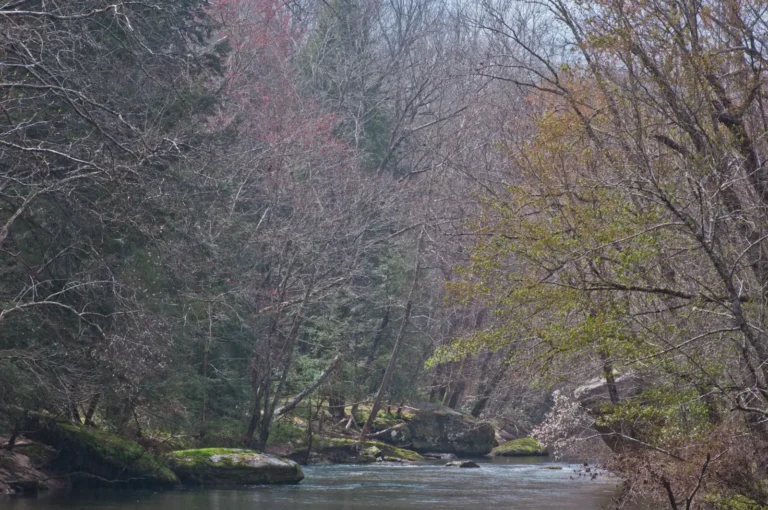
Cosby Creek running through hardwood forest in the Great Smoky Mountains, Tennessee
When to plant and dig bulbs in Tennessee
| Plant | Action | Timing as printed | Depth or spacing as printed | Source |
|---|---|---|---|---|
| Allium (A. christophii) | Plant | S (September per the table key) | 3 inches (planting depth column) | Flowering Bulbs for Tennessee Gardens |
| Allium, ornamental hybrids | Plant | Fall | Plants for Tennessee Landscapes: Bulbs for the Garden | |
| Caladium | Dig | Before frost | Plants for Tennessee Landscapes: Bulbs for the Garden | |
| Caladium | Plant | F (February per the table key; started indoors) | 2 to 3 inches (table); plant 2 inches deep directly in the garden (text) | Flowering Bulbs for Tennessee Gardens |
| Caladium | Plant | Spring, after soil has warmed | Plants for Tennessee Landscapes: Bulbs for the Garden | |
| Caladium | Store | In the fall after lifting before frost | Flowering Bulbs for Tennessee Gardens | |
| Canna | Dig | Autumn after first frost blackens the foliage (colder regions, such as higher mountain elevations) higher mountain elevations | Flowering Bulbs for Tennessee Gardens | |
| Canna | Plant | Where frost-free date is between early April and end of May; after all danger of frost if started indoors | About 1 to 2 inches deep, 15 to 20 inches apart | Flowering Bulbs for Tennessee Gardens |
| Canna | Plant | Spring | Plants for Tennessee Landscapes: Bulbs for the Garden | |
| Crocus hybrids | Plant | S (September per the table key) | 3 to 4 inches (planting depth column) | Flowering Bulbs for Tennessee Gardens |
| Daffodil | Plant | S (September per the table key) | 8 inches (planting depth column) | Flowering Bulbs for Tennessee Gardens |
| Daffodil | Plant | Fall | Plants for Tennessee Landscapes: Bulbs for the Garden | |
| Dahlia | Dig | After the first light frost when there is some damage to the foliage | Flowering Bulbs for Tennessee Gardens | |
| Dahlia | Lift | Fall | Plants for Tennessee Landscapes: Bulbs for the Garden | |
| Dahlia | Plant | Ap, Ma (April, May per the table key) | 6 inches (table); tuberous roots 4 to 6 inches deep, laid on their side (text) | Flowering Bulbs for Tennessee Gardens |
| Dahlia (tuberous roots) | Plant | Spring | 4 to 6 inches deep | Flowering Bulbs for Tennessee Gardens |
| Garlic | Plant | Late fall (September through early November) | Garlic for the Tennessee Vegetable Garden | |
| Garlic | Plant | Between Sept. 1 and Nov. 1 East Tennessee | Garlic for the Tennessee Vegetable Garden | |
| Garlic | Plant | Sept. 15-Nov. 15 West Tennessee | Garlic for the Tennessee Vegetable Garden | |
| Garlic | Plant | September through November | Tennessee Home Fruit and Vegetable Garden 2025 Calendar | |
| Gladiolus | Dig | In autumn prior to frost | Flowering Bulbs for Tennessee Gardens | |
| Gladiolus | Plant | Early spring in successive plantings at two-week intervals, ending no later than 60 days prior to frost | 4 to 6 inches (planting depth column) | Flowering Bulbs for Tennessee Gardens |
| Gladiolus hybrids | Plant | Spring | Plants for Tennessee Landscapes: Bulbs for the Garden | |
| Hardy spring-flowering bulbs (general) | Plant | Late September through early November | 2 to 3 times as deep as the height of the bulb | Flowering Bulbs for Tennessee Gardens |
| Hyacinth | Plant | O (October per the table key) | 6 to 8 inches (planting depth column) | Flowering Bulbs for Tennessee Gardens |
| Hyacinth | Plant | Fall | Plants for Tennessee Landscapes: Bulbs for the Garden | |
| Iris (division) | Divide | As soon as possible after flowering; August or September if the spring is missed | Flowering Bulbs for Tennessee Gardens | |
| Lily | Lift | Very late summer or early fall (late August through September) | Flowering Bulbs for Tennessee Gardens | |
| Lily | Plant | S, O (September, October per the table key) | 4 to 10 inches (planting depth column) | Flowering Bulbs for Tennessee Gardens |
| Spring-flowering bulbs (digging) | Dig | After foliage has died back naturally | Flowering Bulbs for Tennessee Gardens | |
| Summer-flowering bulbs (general) | Plant | May | Summer Flowering Bulbs | |
| Tulip | Plant | S, O (September, October per the table key) | 8 inches (planting depth column) | Flowering Bulbs for Tennessee Gardens |
| Tulip, hybrid | Plant | Fall | Plants for Tennessee Landscapes: Bulbs for the Garden | |
| Tulips, daffodils, hyacinths, crocus, grape hyacinths (forcing) | Force | Approximately 12 to 16 weeks of cold storage at about 33 to 40 F | Flowering Bulbs for Tennessee Gardens |
Planting, digging and storing times are copied from the publications. Some sources are older publications; the date printed on each is in the source list below.
Tennessee pruning and bulbs: questions
When should I prune crape myrtle in Tennessee?
University of Tennessee Extension / UT Institute of Agriculture prints: late winter or early spring, before new growth starts. Other rows in the table above may differ; the source for each is linked.
When should I prune hydrangeas in Tennessee?
Hydrangea, smooth: by early March. Source: University of Tennessee Extension / UT Institute of Agriculture. Timing depends on the hydrangea type, so check each type in the table.
When should I prune roses in Tennessee?
Roses: late winter or early spring before growth starts (stated for plants that flower after July 1). Source: University of Tennessee Extension / UT Institute of Agriculture.
When should I prune fruit trees in Tennessee?
Spring-flowering shrubs and trees that flower before July 1 (azaleas, forsythias, plums, cherries, crabapples, weigela, mock orange, oak leaf hydrangea): immediately following flowering. Source: University of Tennessee Extension / UT Institute of Agriculture. Other fruit rows are in the table above.
When should I plant spring bulbs in Tennessee?
Hardy spring-flowering bulbs (general), plant: late September through early November. Source: University of Tennessee Extension / UT Institute of Agriculture.
When should I plant garlic in Tennessee?
Garlic, plant: late fall (September through early November). Source: University of Tennessee Extension / UT Institute of Agriculture.
Where do these Tennessee pruning and bulb times come from?
Only UT Extension and other official publications are used, listed with dates below. Nothing here comes from nurseries, news or blogs. Plants with no official timing found are left out, not filled in.
Sources for Tennessee pruning and bulb timing
- Best Management Practices for Pruning Landscape Trees, Shrubs and Ground Covers, University of Tennessee Extension / UT Institute of Agriculture, PB1619. Date: 2/09 (printed code 09-0134-PB1619-2/09; copyright 2008). Read November 15, 2026.
- A Tennessee Landscape Contractor’s Guide to Hydrangeas, University of Tennessee Extension / UT Institute of Agriculture, W 304. Date: 12/13. Read November 15, 2026.
- Fruits and Nuts: Fruit Tree Management Timetable, University of Tennessee Extension / UT Institute of Agriculture, SP307-D. Date: 5/06 (Rep). Read November 15, 2026.
- Figs in the Home Planting, University of Tennessee Extension / UT Institute of Agriculture, SP307-I. Date: 11/97 (Rev). Read November 15, 2026.
- Berries: Pruning Blueberries, University of Tennessee Extension / UT Institute of Agriculture, SP284-E. Date: 3/99 (Rev). Read November 15, 2026.
- Berries: Pruning and Training Caneberries, University of Tennessee Extension / UT Institute of Agriculture, SP 284-G. Date: no date printed. Read November 15, 2026.
- Grape Growing in Tennessee, University of Tennessee Extension / UT Institute of Agriculture, PB 1475. Date: 03/01. Read November 15, 2026.
- Tennessee Home Fruit and Vegetable Garden 2025 Calendar, University of Tennessee Extension / UT Institute of Agriculture, W 436. Date: 2025 calendar (PDF created Nov 2024). Read November 15, 2026.
- Plants for Tennessee Landscapes: Perennials, University of Tennessee Extension / UT Institute of Agriculture, W 874-B. Date: 02/20. Read November 15, 2026.
- Ornamental Grasses for Tennessee Landscapes, University of Tennessee Extension / UT Institute of Agriculture, W 874-D. Date: 10/25. Read November 15, 2026.
- Flowering Bulbs for Tennessee Gardens, University of Tennessee Extension / UT Institute of Agriculture, PB 1610. Date: 10/98. Read November 15, 2026.
- Plants for Tennessee Landscapes: Bulbs for the Garden, University of Tennessee Extension / UT Institute of Agriculture, D 140. Date: January 2021. Read November 15, 2026.
- Garlic for the Tennessee Vegetable Garden, University of Tennessee Extension / UT Institute of Agriculture, D 75. Date: December 2019. Read November 15, 2026.
- Proper Crape Myrtle Pruning, UT Department of Biosystems Engineering and Soil Science (UT Extension web post). Date: 2019-02-01 (web post date). Read November 15, 2026.
- Summer Flowering Bulbs, UT Department of Biosystems Engineering and Soil Science (UT Extension web post). Date: 2018-05-16 (web post date). Read November 15, 2026.
Only extension services and other official agencies are used.
More for Tennessee: Tennessee gardening, what to plant now, frost dates and the planting calendar.
Photos: Community garden plots of beans, onions and greens beside flower borders and paths: Mack Male from Edmonton, AB, Canada, CC BY-SA 2.0, via Wikimedia Commons; Clear Fork river through wooded banks in the Big South Fork area, Tennessee: MateoTimateo, CC BY-SA 4.0, via Wikimedia Commons; Cosby Creek running through hardwood forest in the Great Smoky Mountains, Tennessee: Brian Stansberry, CC BY 3.0, via Wikimedia Commons.