Home › Pennsylvania › Pruning and bulbs
Pennsylvania
Pennsylvania Pruning and Bulb Timing
This page lists 47 pruning timing entries and 30 bulb timing entries for Pennsylvania from 21 official publications of Penn State Extension and other official sources. Each row shows the timing as the publication prints it, with its source.
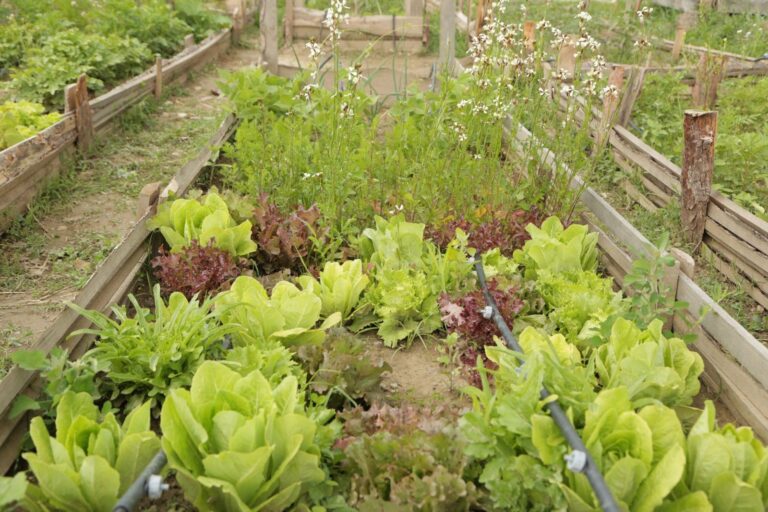
Photo: Rows of green and red lettuce growing in wooden-edged beds with drip irrigation. SA, The Green Ark, Bostanie, CC BY 4.0, via Wikimedia Commons
When extension says to prune in Pennsylvania
Start typing to narrow the rows.
Trees
| Plant | Timing as printed | What to cut, as printed | Source |
|---|---|---|---|
| Hawthorn, crabapple, pear and other flowering trees | Immediately after flowering | Pruning Landscape Trees | |
| Needled evergreens (fir, spruce, juniper, yew, hemlock, pine, arborvitae) Abies; Picea; Juniperus; Taxus; Tsuga; Pinus; Thuja | Late winter to early spring before new growth develops | Conifers are resinous; prune dangerous branches anytime. Avoid: Pruning when their sap is running is discouraged for some species | Pruning Needled Evergreens |
| Oaks (oak wilt risk) Quercus spp. | Avoid April to at least July, ideally October; winter months for harvesting | Applies where oak wilt is an issue. Avoid: When oak wilt fungus is most active (April to at least July but ideally October) | Oak Wilt in Eastern Forests |
| Pines (dwarf mugo, white pine) Pinus mugo; Pinus strobus | June to early July | Pinch off half to two-thirds of the candle to make pines denser. | Pruning Needled Evergreens |
| Trees (late dormancy) | Late winter and early spring (February-March) | Late dormancy pruning lets plants heal wounds before growth demands. | Pruning Deciduous Shrubs |
| Trees and shrubs (Blair County) | Late winter | Insects and diseases not yet active; branching structure visible. Avoid: Late summer and fall pruning are not recommended as new growth at that time of year is subject to winter injury. | Tips On Pruning |
| Young landscape trees (all) | Avoid bud break until full leaf expansion and at dormancy onset; once dormant, resume pruning | Training young trees. Avoid: Avoid pruning trees from bud break until full leaf expansion and as they become dormant | Pruning Landscape Trees |
Shrubs
| Plant | Timing as printed | What to cut, as printed | Source |
|---|---|---|---|
| Azalea Rhododendron spp. | Prune spring-blooming shrubs soon after they finish flowering | Azaleas bloom on old wood. Avoid: If you wait too long to prune them, you will remove many of next year's blooms | Pruning Flowering Shrubs |
| Bigleaf hydrangea Hydrangea macrophylla | After flowering is generally recommended (Beaver County); blooms on old wood | Blooms mainly on old wood; some newer cultivars flower on new wood. Avoid: If they are pruned in fall or heavily browsed by deer, the result is the same—few or no flowers. | When to Prune Which Hydrangea Species |
| Bigleaf hydrangea (Beaver County column) Hydrangea macrophylla | Pruning after flowering is generally recommended | Flowers mainly on old wood, some newer cultivars flower on new wood. | Pruning Deciduous Shrubs |
| Butterfly bush Buddleia spp. | Late winter or very early spring before they develop new foliage | Blooms on new wood. | Pruning Flowering Shrubs |
| Crape myrtle Lagerstroemia indica | Late winter and early spring | Flowers on new wood. | Pruning Deciduous Shrubs |
| Forsythia, lilac, flowering quince, rhododendron, azalea, viburnum, weigela, Virginia sweetspire (old-wood bloomers) Forsythia x intermedia; Syringa spp.; Chaenomeles speciosa | After they bloom (flowering season between May and August depending on species) | Rejuvenation: forsythia and redosier dogwood can be cut to two inches from ground. Avoid: Pruning off branches in late winter, before they have a chance to grow new wood, effectively removes this year's flower buds | Pruning Deciduous Shrubs |
| Hard pruning of flowering shrubs | Early spring, before the shrub begins to develop new foliage | Remove biggest, oldest stems at ground level to rejuvenate. | Pruning Flowering Shrubs |
| Oakleaf hydrangea Hydrangea quercifolia | After flowering | Blooms on old wood. Avoid: If they are pruned at the wrong time or browsed by Bambi, flowering is reduced | When to Prune Which Hydrangea Species |
| Oakleaf hydrangea (Beaver County column) Hydrangea quercifolia | After flowering is over, if at all | Flowers on old wood. | Pruning Deciduous Shrubs |
| Overgrown forsythia, lilac, spirea (rejuvenation) Forsythia; Syringa; Spiraea | Early spring | Cut all stems back to the ground; may delay flowering for several years. | How and When to Prune Flowering Shrubs |
| Panicle or peegee hydrangea (Beaver County column) Hydrangea paniculata | Late winter/early spring | Flowers on new wood; includes 'Limelight', 'Bobo', 'Moon Dance'. | Pruning Deciduous Shrubs |
| Peegee (panicle) hydrangea Hydrangea paniculata | Late winter or very early spring | Blooms on new wood; can be cut to the ground; shrub or single-trunk tree form. | When to Prune Which Hydrangea Species |
| Rose of Sharon, Japanese spirea, hardy hibiscus (new-wood bloomers) Hibiscus syriacus; Spirea japonica; Hibiscus moscheutos | Late winter and early spring | Prune to encourage new branch growth and abundant flowering. | Pruning Deciduous Shrubs |
| Shrubs in general | Late winter and early spring | Leafless shrubs let you see shape and dead, damaged, diseased wood. Avoid: Late summer and fall pruning are not desirable pruning times, as new growth at that time of year is subject to winter injury | How and When to Prune Flowering Shrubs |
| Smooth hydrangea Hydrangea arborescens | Late winter or very early spring | Can be cut to the ground and still bloom; blooms on new wood. | When to Prune Which Hydrangea Species |
| Smooth hydrangea (Beaver County column) Hydrangea arborescens | February/March | Flowers on new wood; many smooth leaf varieties can tolerate being cut back to the ground. | Pruning Deciduous Shrubs |
| Smooth hydrangea and panicle hydrangea (summer-blooming shrubs list) Hydrangea arborescens; Hydrangea paniculata | Late winter or very early spring before they develop new foliage | Bloom on new wood. | Pruning Flowering Shrubs |
| Spring flowering shrubs or trees (azalea, ninebark, lilac, rhododendron, viburnum, forsythia, some hydrangeas) | After flowering (if maximum bloom is important) | Tips On Pruning | |
| Spring-blooming shrubs (forsythia, lilac, viburnum, ninebark, quince, mock orange, spring-flowering roses) Forsythia spp.; Syringa spp.; Viburnum spp. | Soon after they finish flowering | Set next year's flower buds shortly after they finish blooming. | Pruning Flowering Shrubs |
| Spring-flowering shrubs (lilac, azalea, forsythia, fothergilla, kerria, mockorange, rhododendron, weigela) Syringa spp.; Forsythia | After flowering | Flower buds develop the previous growing season on old wood; renewal method, remove no more than one-third of largest stems. Avoid: If pruned too early, you will remove the flower buds | How and When to Prune Flowering Shrubs |
| Summerweet and blue mist spirea (summer-blooming shrubs) Clethra alnifolia; Caryopteris x clandonensis | Late winter/early spring | Flower buds form on new wood produced during the current season. | How and When to Prune Flowering Shrubs |
Hedges and evergreens
| Plant | Timing as printed | What to cut, as printed | Source |
|---|---|---|---|
| Boxwood, yew, privet, hemlock (shearing) Buxus; Taxus; Ligustrum | When the plant is growing most actively | Shearing keeps plants in a formal shape; best hedge shape is rounded or slightly pointed top, base wider than top. | Keeping Plants Well Groomed |
| Formal hedges: yew, boxwood, privet Taxus spp.; Buxus spp.; Ligustrum amurense | Not printed (see note) | Heading back is acceptable only for formal hedge rows of these species. | Pruning Deciduous Shrubs |
| Sheared conifer hedges (arborvitae, hemlock, yew) Thuja; Tsuga; Taxus | Early spring, with another optional light pruning in the summer | Hedges in inverted V shape, wider at bottom. | Pruning Needled Evergreens |
Roses
| Plant | Timing as printed | What to cut, as printed | Source |
|---|---|---|---|
| Repeat-blooming roses Rosa spp. and hybrids | Late winter or very early spring before they develop new foliage | Listed as summer- and fall-blooming shrubs that bloom on new wood. | Pruning Flowering Shrubs |
| Roses | March | Seasonal care calendar item for perennial beds. | Care and Maintenance of Perennials |
| Spring-flowering roses Rosa spp. | Soon after they finish flowering | Listed with spring-blooming shrubs that bloom on old wood. | Pruning Flowering Shrubs |
Vines
| Plant | Timing as printed | What to cut, as printed | Source |
|---|---|---|---|
| Grape Vitis spp. | Winter months when vines are dormant, usually between December and March | Sets bud number and crop; about 90 percent of new growth removed. | Backyard Grape Growing |
| Newly planted grape Vitis spp. | While the vine is still dormant (at planting) | Prune back to one or two canes with two to three nodes each. | Backyard Grape Growing |
Fruit plants
| Plant | Timing as printed | What to cut, as printed | Source |
|---|---|---|---|
| Black and purple raspberries (summer topping) Rubus occidentalis | Throughout the summer, two to three times | Top at 36 inches, removing 3 to 4 inches of new growth. | Pruning Brambles in Home Fruit Plantings |
| Blueberry Vaccinium spp. | Toward the end of the dormant season, usually sometime in March | Renew older canes by cutting them out; remove all fruit buds the first season. Avoid: Fall pruning is not recommended since it can force the plant to produce new shoots that will be killed by winter cold. | Pruning Blueberries in Home Fruit Plantings |
| Everbearing red (or gold) raspberries Rubus idaeus | Dormant season | Mow to a height of 1 to 2 inches. | Pruning Brambles in Home Fruit Plantings |
| June-bearing red raspberry (dormant) Rubus idaeus | March (any time canes are fully dormant) Pennsylvania | Remove canes outside the 12-inch row, thin to 6 to 8 inches, top to 48 to 60 inches. | Pruning Brambles in Home Fruit Plantings |
| Peach summer pruning (vigorous shoots) Prunus persica | By early July | Remove vigorous vegetative shoots that shade tree interior by hand pruning. Avoid: Summer pruning later than mid-July will have no effect on flower bud development. | Fruit Tree Pruning, Summer Pruning Cautions |
| Peach, plum, tart cherry and other stone fruits Prunus spp. | From just before bloom to 2 weeks after petal fall | Open-center (vase) system. Avoid: Do not prune the trees from January through March, and do not prune before budswell. | Pruning and Training Home Fruit Trees to an Open Center |
| Raspberries and blackberries (fruited canes) Rubus spp. | Immediately after fruiting | Fruiting canes of all brambles except primocane-bearing types die after fruiting. | Pruning Brambles in Home Fruit Plantings |
| Stone fruit trees (general statement, same page) Prunus spp. | Late winter | Same page also says prune in late winter; conflicts with its January-March prohibition (see flagged). Avoid: If pruned in the winter, the trees cannot protect the pruning wounds from infection by this disease (cytospora canker). | Pruning and Training Home Fruit Trees to an Open Center |
| Sweet cherry Prunus avium | After they have fruited or in early July | Exception to the stone fruit timing. | Pruning and Training Home Fruit Trees to an Open Center |
Perennials and grasses
| Plant | Timing as printed | What to cut, as printed | Source |
|---|---|---|---|
| Perennials (cutback) | June; September (calendar lists Cut back) | Seasonal calendar item; no plant-specific detail. | Care and Maintenance of Perennials |
Other plants
| Plant | Timing as printed | What to cut, as printed | Source |
|---|---|---|---|
| Perennials: tall ornamental grasses | March | Seasonal care calendar item. | Care and Maintenance of Perennials |
Timing words are copied from the publication. Publications can disagree, so a plant can appear in more than one row. Blank cells mean the source prints nothing for that column.
Rail fence and meadow below wooded ridges along the Swatara Rail Trail, Swatara State Park
When extension says to plant bulbs in Pennsylvania
| Plant | Action | Timing as printed | Depth or spacing as printed | Source |
|---|---|---|---|---|
| Autumn daffodil | Plant | Late summer (fall-blooming group) | About 6 inches deep | The Unexpected Delight of Fall-Blooming Bulbs |
| Autumn-flowering crocus | Plant | Late summer (fall-blooming group) | 3 to 4 inches deep | The Unexpected Delight of Fall-Blooming Bulbs |
| Calla lily | Dig | Once the leaves have died back or after the first frost | Summer and Fall Blooming Bulbs | |
| Calla lily | Plant | Spring after the threat of frost | 3 to 4 inches deep and 12 to 18 inches apart, eyes facing upward | Summer and Fall Blooming Bulbs |
| Canna | Dig | In the fall after frost has killed the foliage | Summer and Fall Blooming Bulbs | |
| Canna | Plant | Spring after the threat of frost | 3 to 4 inches deep and 1½ to 3 feet apart, eyes facing upward | Summer and Fall Blooming Bulbs |
| Colchicum (meadow saffron) | Plant | Late summer (fall-blooming group) | 2 to 3 inches deep | The Unexpected Delight of Fall-Blooming Bulbs |
| Daffodil (naturalizing) | Plant | Not printed | Bulbs, Corms, Rhizomes and Tubers | |
| Dahlia | Dig | After a killing frost, wait four to eight days after cutting stems back | Summer and Fall Blooming Bulbs | |
| Dahlia | Plant | Spring after the threat of frost | 4 to 6 inches deep with the eyes facing up | Summer and Fall Blooming Bulbs |
| Fall-blooming bulbs (colchicum, fall crocus, Sternbergia) | Plant | Late summer | The Unexpected Delight of Fall-Blooming Bulbs | |
| Fall-blooming bulbs (lift/replant) | Lift | During their summer dormancy | The Unexpected Delight of Fall-Blooming Bulbs | |
| Garlic | Dig | Early to mid-July | Growing and Using Garlic | |
| Garlic | Plant | Mid- to late-October | 1 to 2 inches deep, pointy end up; 6 to 7 inches apart, 1 foot between rows | Growing and Using Garlic |
| Garlic (late planting for allium leafminer) | Plant | As late in the fall as possible; around November 1 in southeastern Pennsylvania southeastern Pennsylvania | Plant Garlic Late to Avoid Allium Leafminer | |
| Gladiolus | Dig | Any time before the ground freezes | Summer and Fall Blooming Bulbs | |
| Gladiolus | Plant | Spring; stagger planting every 10 to 14 days for continuous bloom | Small corms 2 to 3 inches deep, larger ones 4 to 6 inches deep | Summer and Fall Blooming Bulbs |
| Spring bulbs (Chester County) | Plant | Late fall, up until the ground is frozen, but not more than six weeks before the first frost southeastern Pennsylvania (Chester County) | Plant two to three times as deep as the bulb is tall; large bulbs like tulips or daffodils about 8 inches deep, smaller bulbs 3-4 inches deep | Bulbs, Corms, Rhizomes and Tubers |
| Spring bulbs (divide and replant) | Divide | After the foliage has yellowed; about every three years | Bulbs, Corms, Rhizomes and Tubers | |
| Spring bulbs (lifting) | Lift | After about three years | Bulbs, Corms, Rhizomes and Tubers | |
| Spring bulbs (western Pennsylvania) | Plant | September to October, before the first frost western Pennsylvania | Plant Bulbs in the Fall for a Spring Celebration | |
| Spring bulbs: divide | Divide | When they become crowded, overgrown, or not flowering | Plant Bulbs in the Fall for a Spring Celebration | |
| Spring-blooming bulbs (tulip, daffodil, hyacinth) | Plant | In the fall, before the first frost | Two and one-half to three times deeper than the bulb height; a 2-inch tulip bulb at five to six inches | Plant Bulbs in the Fall for a Spring Celebration |
| Summer and fall bulbs (storage) | Store | Through the winter, in a cool area, 40°F to 50°F | Summer and Fall Blooming Bulbs | |
| Summer bulbs | Plant | Late spring after the last frost, typically May 31 | Plant Bulbs in the Fall for a Spring Celebration | |
| Summer-blooming bulbs (dahlia, canna, gladiolus, tuberous begonia) | Plant | Spring | Varied; consult the information supplied with the bulbs | Bulbs, Corms, Rhizomes and Tubers |
| Summer-blooming bulbs: store | Store | Over winter in a frost-free area until replanted the following spring | Bulbs, Corms, Rhizomes and Tubers | |
| Tuberous begonia | Dig | When foliage yellows or after the first light frost | Summer and Fall Blooming Bulbs | |
| Tulip (example) | Plant | Fall | A tulip bulb that is two inches long should be planted at a depth of five to six inches | Plant Bulbs in the Fall for a Spring Celebration |
| Tulip and daffodil (Chester County depth) | Plant | Fall | Most large bulbs like tulips or daffodils will be planted about 8 inches deep while smaller bulbs will be planted 3-4 inches deep | Bulbs, Corms, Rhizomes and Tubers |
Planting, digging and storing times are copied from the publications. Some sources are older publications; the date printed on each is in the source list below.
Pennsylvania pruning and bulbs: questions
Can I prune crape myrtle in winter in Pennsylvania?
Penn State Extension, Beaver County Master Gardeners prints: late winter and early spring. Other rows in the table above may differ; the source for each is linked.
Is there a best time to prune hydrangea in Pennsylvania?
Smooth hydrangea and panicle hydrangea (summer-blooming shrubs list): late winter or very early spring before they develop new foliage. Source: Penn State Extension (fact sheet). Timing depends on the hydrangea type, so check each type in the table.
Is late winter the time to prune roses in Pennsylvania?
Spring-blooming shrubs (forsythia, lilac, viburnum, ninebark, quince, mock orange, spring-flowering roses): soon after they finish flowering. Source: Penn State Extension (fact sheet).
Is there a best time to prune fruit trees in Pennsylvania?
Hawthorn, crabapple, pear and other flowering trees: immediately after flowering. Source: Penn State Extension (publication). Other fruit rows are in the table above.
When is bulb planting time in Pennsylvania?
Spring-blooming bulbs (tulip, daffodil, hyacinth), plant: in the fall, before the first frost. Source: Penn State Extension.
When is garlic planting season in Pennsylvania?
Garlic, plant: mid- to late-October. Source: Penn State Extension.
What sources are used for Pennsylvania bulb timing?
Only Penn State Extension and other official publications are used, listed with dates below. Nothing here comes from nurseries, news or blogs. Plants with no official timing found are left out, not filled in.

Sources used for Pennsylvania pruning
- How and When to Prune Flowering Shrubs, Penn State Extension (Master Gardener article). Date: Updated: September 16, 2026. Read November 15, 2026.
- Pruning Flowering Shrubs, Penn State Extension (fact sheet). Date: Updated: July 10, 2025. Read November 15, 2026.
- When to Prune Which Hydrangea Species, Penn State Extension. Date: Updated: December 16, 2025. Read November 15, 2026.
- Pruning Deciduous Shrubs, Penn State Extension, Beaver County Master Gardeners. Date: Posted: March 6, 2024. Read November 15, 2026.
- Tips On Pruning, Penn State Extension, Blair County Master Gardeners. Date: Posted: June 15, 2022. Read November 15, 2026.
- Pruning Landscape Trees, Penn State Extension (publication). Date: Updated: November 5, 2021. Read November 15, 2026.
- Pruning Needled Evergreens, Penn State Extension. Date: Updated: January 11, 2024. Read November 15, 2026.
- Keeping Plants Well Groomed, Penn State Extension (publication). Date: Updated: December 2, 2011. Read November 15, 2026.
- Oak Wilt in Eastern Forests, Penn State Extension. Date: Updated: March 19, 2025. Read November 15, 2026.
- Pruning and Training Home Fruit Trees to an Open Center, Penn State Extension. Date: Updated: June 29, 2026. Read November 15, 2026.
- Fruit Tree Pruning, Summer Pruning Cautions, Penn State Extension. Date: Updated: January 5, 2024. Read November 15, 2026.
- Backyard Grape Growing, Penn State Extension. Date: Updated: June 16, 2005. Read November 15, 2026.
- Pruning Blueberries in Home Fruit Plantings, Penn State Extension. Date: Updated: March 31, 2026. Read November 15, 2026.
- Pruning Brambles in Home Fruit Plantings, Penn State Extension. Date: Updated: February 28, 2024. Read November 15, 2026.
- Care and Maintenance of Perennials, Penn State Extension. Date: Updated: March 9, 2026. Read November 15, 2026.
- Plant Bulbs in the Fall for a Spring Celebration, Penn State Extension. Date: Updated: August 25, 2025. Read November 15, 2026.
- The Unexpected Delight of Fall-Blooming Bulbs, Penn State Extension. Date: Updated: August 24, 2025. Read November 15, 2026.
- Summer and Fall Blooming Bulbs, Penn State Extension. Date: Updated: February 18, 2026. Read November 15, 2026.
- Bulbs, Corms, Rhizomes and Tubers, Penn State Extension, Chester County Master Gardeners. Date: no date printed. Read November 15, 2026.
- Growing and Using Garlic, Penn State Extension. Date: Updated: June 17, 2025. Read November 15, 2026.
- Plant Garlic Late to Avoid Allium Leafminer, Penn State Extension. Date: Updated: October 7, 2026. Read November 15, 2026.
Only extension services and other official agencies are used.
More for Pennsylvania: Pennsylvania gardening, what to plant now, frost dates and the planting calendar.
Photos: Rows of green and red lettuce growing in wooden-edged beds with drip irrigation: SA, The Green Ark, Bostanie, CC BY 4.0, via Wikimedia Commons; Windswept green meadow under white clouds in Mount Pleasant Township, Columbia County: Nicholas A. Tonelli, CC BY 2.0, via Flickr; Rail fence and meadow below wooded ridges along the Swatara Rail Trail, Swatara State Park: Michael Stokes, CC BY 2.0, via Flickr.