Home › North Carolina › Garden pests
North Carolina
North Carolina Garden Pests Now
NCDA&CS lists spotted lanternfly as established in 7 North Carolina counties (Forsyth, Guilford, Caldwell, Rockingham, Davidson, Rowan and Caswell) and no quarantine order was found. This page lists 6 quarantine and detection entries and 26 pest timing entries from 15 official sources.
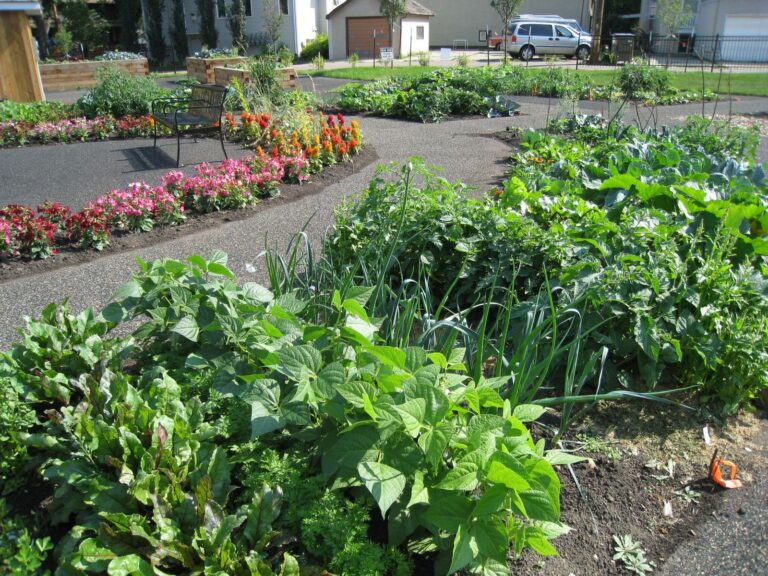
Photo: Community garden plots of beans, onions and greens beside flower borders and paths. Mack Male from Edmonton, AB, Canada, CC BY-SA 2.0, via Wikimedia Commons
North Carolina plant pest quarantines by county
Statuses are quoted from the agency pages and orders.
| Pest | Status as printed | Counties | As of | Source |
|---|---|---|---|---|
| Spotted lanternfly Lycorma delicatula | Established populations confirmed in seven counties (no quarantine order found on pages read) | 7 counties listed | Feb 10, 2026 | NCDA&CS finds spotted lanternfly in three additional counties |
| Imported fire ant | Quarantine in effect; portions or entire areas of 81 counties | 81 counties listed | expansion effective Jan. 1, 2026 | 2026 North Carolina Imported Fire Ant Quarantined Areas by County |
| Emerald ash borer | Entire state under quarantine | Statewide | No date printed | Plant Industry – Plant Pest Quarantines |
| Guava root knot nematode | Entire state under quarantine | Statewide | No date printed | Plant Industry – Plant Pest Quarantines |
| Spongy moth (listed as Gypsy Moth in the page heading) | Regulated in counties marked Yes (Dare partially regulated) | 2 counties listed | No date printed | Plant Industry – Plant Pest Quarantines |
| Witchweed | Regulated in counties marked Yes (all counties in the witchweed list are partially regulated) | 5 counties listed | No date printed | Plant Industry – Plant Pest Quarantines |
Spotted lanternfly: 7 counties named in the source
Forsyth, Guilford, Caldwell, Rockingham, Davidson, Rowan, Caswell.
Imported fire ant: 81 counties named in the source
Alamance, Anson, Beaufort, Bertie, Bladen, Brunswick, Burke, Cabarrus, Camden, Carteret, Caswell, Catawba, Chatham, Cherokee, Chowan, Clay, Cleveland, Columbus, Craven, Cumberland, Currituck, Dare, Davidson, Davie, Duplin, Durham, Edgecombe, Forsyth, Franklin, Gaston, Gates, Graham, Granville, Greene, Guilford, Halifax, Harnett, Hertford, Hoke, Hyde, Iredell, Jackson, Johnston, Jones, Lee, Lenoir, Lincoln, Macon, Martin, McDowell, Mecklenburg, Montgomery, Moore, Nash, New Hanover, Northampton, Onslow, Orange, Pamlico, Pasquotank, Pender, Perquimans, Person, Pitt, Polk, Randolph, Richmond, Robeson, Rowan, Rutherford, Sampson, Scotland, Stanly, Tyrell, Union, Vance, Wake, Warren, Washington, Wayne, Wilson.
Permit needed to move nursery stock, sod, soil, hay and straw, logs or pulpwood with soil, and soil-moving equipment from these counties into or through non-infested areas.
Spongy moth (listed as Gypsy Moth in the page heading): 2 counties named in the source
Currituck, Dare.
Witchweed: 5 counties named in the source
Bladen, Cumberland, Pender, Robeson, Sampson.
Statuses and county names are copied from the listed pages. A county that is not named is not marked clear: check the department page for the current order before moving plants, firewood or soil.

North Carolina pest calendar: beetles, worms, borers and bugs
Filter by a pest name or a month.
| Pest | Stage | When, as printed | Plants | Advice as printed | Source |
|---|---|---|---|---|---|
| Cabbage looper | Moths | Spring | Crucifers | Pests of Crucifers | |
| Cabbage maggot | Adult flies | As early as April; second generation late June or early July | Crucifers | Pests of Crucifers | |
| Colorado potato beetle | Adults | Spring | Potato (and other hosts) | Pests of Potato | |
| Cutworms | Overwintered larvae | Early spring | Tomato (seedlings and newly set plants) | Inspect plant beds and newly set plants frequently; bait may be used, per publication. | Pests of Tomato |
| Harlequin bug | Adults | Early spring | Crucifers | Pests of Crucifers | |
| Imported cabbageworm | Adults | Early spring | Crucifers | Pests of Crucifers | |
| Japanese beetle | Adults | About mid-June in most parts of North Carolina, feeding for a couple of months | Roses, apples, peaches, blackberries, sweet corn | Controlling Japanese Beetles Around the Home | |
| Pickleworm | Moths | Early July (Raleigh area) | Cucurbits (prefers summer squash) | Pests of Cucurbits | |
| Spotted lanternfly | Egg mass | September to May | Report sightings outside Guilford, Forsyth and Davidson counties using the NCDA&CS reporting tool. | Plant Industry – Spotted Lanternfly | |
| Spotted lanternfly | Early instars | Late March to June | Plant Industry – Spotted Lanternfly | ||
| Spotted lanternfly | Late instar | Late May to July | Tree-of-heaven preferred host | Plant Industry – Spotted Lanternfly | |
| Spotted lanternfly | Adults | July to December | Tree-of-heaven preferred host | Plant Industry – Spotted Lanternfly | |
| Squash bug | Adults, nymphs | Spring (when cucurbit vines start to run); nymphs and adults present throughout summer until frost | Cucurbits (squash, pumpkin) | In small gardens, hand-remove adults and egg-mass leaves; trap under boards and collect next morning; destroy crop debris after harvest. | Pests of Cucurbits |
| Squash bug | Nymphs and adults | Throughout summer | Cucurbits | Pests of Cucurbits | |
| Squash vine borer | Adult moths | April | Squash, pumpkin | Check plant bases for excrement at first wilting; slit infested vines and cover with moist soil, per publication. | Pests of Cucurbits |
| Squash vine borer | Eggs | Throughout April and May | Squash, pumpkin | Pests of Cucurbits | |
| Squash vine borer | Second-generation larvae | August | Squash, pumpkin | Pests of Cucurbits | |
| Striped cucumber beetle | Adults leave winter sites | Late March | Cucumber, squash, melon and other cucurbits | Pests of Cucurbits | |
| Striped cucumber beetle | Eggs | Late April through early June | Cucurbits | A foliar insecticide applied at the cotyledon stage will retard beetle feeding, per publication. | Pests of Cucurbits |
| Striped cucumber beetle | First-generation adults | Late June to early July | Cucurbits | Pests of Cucurbits | |
| Tobacco budworm | Adults | Emerge from late April to mid-May | Tomato | Pests of Tomato | |
| Tomato fruitworm | Adults | Emerge from early May to early June | Tomato | Damage is minimal when fruits are harvested before July 20; first treatment when first-cluster tomatoes are about 1/2 inch in diameter, per publication. | Pests of Tomato |
| Tomato hornworm | Adult moths (overwintering generation) | Begin to emerge in early June and may continue to emerge as late as August | Tomato | Pests of Tomato | |
| Tomato hornworm | Eggs | Heavy egg deposition is common in August and early September | Tomato | Pests of Tomato | |
| Tomato hornworm | Larvae (damage) | Hornworm damage usually begins in midsummer and continues throughout the remainder of the growing season | Tomato | Pests of Tomato | |
| Vegetable leafminer | Adult flies | Emerge in April or May | Tomato | Pests of Tomato |
Timing words are copied from the publication and are not converted to dates. Many extension pages are for one part of the state or one year; the source column shows which. Blank cells mean the page prints nothing for that column.
Cicada broods that emerge in North Carolina
| Brood | Emergence year as printed | Counties or area as printed | Source |
|---|---|---|---|
| Brood XIX | 2024 and 2037 | Has historically been present in Buncombe County, as well as other areas of central/eastern North Carolina | 2024 Cicada Emergence FAQ |
| Brood XIV | 2025 and 2042 | Buncombe, Burke, Caldwell, Catawba, Henderson, McDowell, Mitchell, Wilkes | Back With a Buzz: Brood XIV Cicadas Emerge in Western NC |
| Brood XXII | 2027 and 2044 | No county list printed | Periodical Cicadas in the Landscape |
| Brood XVIII | 2028 and 2041 | No county list printed | Periodical Cicadas in the Landscape |
| Brood II | 2030 and 2047 | Emerges in the foothills of North Carolina all the way up into New England | Periodical Cicadas in the Landscape |
| Brood X | 2038 and 2055 | No county list printed | Periodical Cicadas in the Landscape |
| Brood IX | 2020 | Ashe, Alleghany, Forsyth, Stokes, Surry, Wilkes | 17 Years in the Making: Periodical Cicadas Emerging in North Carolina |
Brood years and counties come from the pages listed. Pages differ in age and in how they list counties, so rows for the same brood can differ.
North Carolina garden pests: questions
Has spotted lanternfly reached North Carolina?
Spotted lanternfly: established populations confirmed in seven counties (no quarantine order found on pages read). The page says: "bringing the total number of counties where established populations of this destructive pest has been found in the state to seven" Source: NC Department of Agriculture and Consumer Services (NCDA&CS).
When should I watch for Japanese beetles in North Carolina?
NC Cooperative Extension, Rowan County Center prints for adults: about mid-June in most parts of North Carolina, feeding for a couple of months (most parts of North Carolina).
What time of year are hornworms a problem in North Carolina?
NC State Extension Publications prints for adult moths (overwintering generation): begin to emerge in early June and may continue to emerge as late as August (North Carolina).
When do squash bugs and borers start in North Carolina?
Squash bug, adults, nymphs: spring (when cucurbit vines start to run); nymphs and adults present throughout summer until frost. Source: NC State Extension Publications.
Is the imported fire ant quarantined in North Carolina?
Imported fire ant: quarantine in effect; portions or entire areas of 81 counties. 81 counties are listed on the page. Source: NCDA&CS Plant Industry Division.
When are the next cicadas in North Carolina?
The sources here name 7 broods: Brood XIX, 2024 and 2037; Brood XIV, 2025 and 2042; Brood XXII, 2027 and 2044; Brood XVIII, 2028 and 2041. The table above lists every row with its source and county list where one is printed.
Which agencies are the sources for North Carolina pests?
Only the state agriculture department, N.C. Cooperative Extension and federal agencies (USDA APHIS and the Forest Service) are used, listed with dates below. Nothing here comes from news, nurseries or pest control companies.

North Carolina pest sources
- NCDA&CS finds spotted lanternfly in three additional counties, NC Department of Agriculture and Consumer Services (NCDA&CS). Date: Feb 10, 2026. Read November 14, 2026.
- Plant Industry – Spotted Lanternfly, NCDA&CS Plant Industry Division. Date: no date printed. Read November 14, 2026.
- Plant Industry – Plant Pest Quarantines, NCDA&CS Plant Industry Division. Date: no date printed. Read November 14, 2026.
- Quarantine area for the imported fire ant expands to all of Davie, Forsyth and, NCDA&CS. Date: Jan 14, 2026. Read November 14, 2026.
- 2026 North Carolina Imported Fire Ant Quarantined Areas by County, NCDA&CS Plant Industry Division. Date: no date printed. Read November 14, 2026.
- Plant Industry – Imported Fire Ant, NCDA&CS Plant Industry Division. Date: no date printed. Read November 14, 2026.
- Pests of Tomato, NC State Extension Publications, AG-295. Date: June 17, 2024. Read November 14, 2026.
- Pests of Cucurbits, NC State Extension Publications, AG-295. Date: June 11, 2024. Read November 14, 2026.
- Pests of Crucifers, NC State Extension Publications, AG-295. Date: June 6, 2024. Read November 14, 2026.
- Pests of Potato, NC State Extension Publications, AG-295. Date: no date printed. Read November 14, 2026.
- Controlling Japanese Beetles Around the Home, NC Cooperative Extension, Rowan County Center. Date: June 21, 2022 (updated June 29, 2022). Read November 14, 2026.
- Periodical Cicadas in the Landscape, NC State Extension Publications. Date: Reviewed/Revised: May 7, 2023. Read November 14, 2026.
- Back With a Buzz: Brood XIV Cicadas Emerge in Western NC, NC State Extension Forestry. Date: April 30, 2025. Read November 14, 2026.
- 2024 Cicada Emergence FAQ, NC Cooperative Extension, Buncombe County Center. Date: February 16, 2024 (updated May 1, 2024). Read November 14, 2026.
- 17 Years in the Making: Periodical Cicadas Emerging in North Carolina, NCDA&CS (agency blog). Date: May 27, 2020. Read November 14, 2026.
Only the state agriculture department, the land-grant extension service and federal agencies are used.
More for North Carolina: North Carolina gardening, invasive and banned plants, what to plant now and frost dates.
Photos: Community garden plots of beans, onions and greens beside flower borders and paths: Mack Male from Edmonton, AB, Canada, CC BY-SA 2.0, via Wikimedia Commons; Storm front over wind turbines and farm fields near Elizabeth City, Pasquotank County: BAXINTHE757, CC BY-SA 2.0, via Flickr; Farm fields in a wooded valley, Surry County: Chris_Short, CC BY-SA 2.0, via Flickr; Pasture and old barn across a pond in Moore County: Donald Lee Pardue, CC BY 2.0, via Flickr; Thunderhead over crop fields in Jones County: Elaine with Grey Cats, CC BY-SA 2.0, via Flickr; Old barn and field under a storm sky, Greene County: andycox93, CC BY 2.0, via Flickr.