
Texas
Texas Garden Pests Now
The Texas Department of Agriculture lists emerald ash borer under quarantine in 41 counties and publishes no spotted lanternfly page. This page lists 6 quarantine and detection entries and 17 pest timing entries from 14 official sources.
Photo: Rainbow chard growing beside orange marigolds in a raised garden bed. Missvain, CC BY 4.0, via Wikimedia Commons
What Texas agencies say about quarantines
Dates are as printed on each source.
| Pest | Status as printed | Counties | As of | Source |
|---|---|---|---|---|
| Emerald ash borer | Quarantine in effect in the counties listed (Rule 19.701) | 41 counties listed | 7/22/2026 (latest chronology entry) | Emerald Ash Borer |
| Red imported fire ant Solenopsis invicta Buren and S. richteri Forel | Quarantined counties (federal list, Last updated: October 27, 2022; Lubbock County partial) | 188 counties listed | Last updated: October 27, 2022 | Imported Fire Ant Quarantined Areas 7 C.F.R. § 301.81-3 |
| Citrus greening | Quarantine in effect: Gulf Coast, Coastal Bend, Valley and Webb County Quarantined Areas | 18 counties listed | 02/10/2023 (latest chronology entry) | Citrus Greening |
| Asian citrus psyllid | Entire state of Texas quarantined by USDA on January 28, 2009 (TDA state quarantine rescinded Jan 30, 2009) | Statewide | No date printed | Asian Citrus Psyllid |
| Cactus moth Cactoblastis cactorum (Berg) | Detected | 4 counties listed | No date printed | Cactus Moth |
| Japanese beetle Popillia japonica | Detected at some sites during 1997-2008 statewide surveys; no counties quarantined | No county list printed | No date printed | Japanese Beetle |
Emerald ash borer: 41 counties named in the source
Bell, Bosque, Bowie, Camp, Cass, Clay, Collin, Cooke, Dallas, Delta, Denton, Ellis, Erath, Franklin, Grayson, Hardin, Harrison, Hill, Hood, Hopkins, Jack, Johnson, Lamar, Marion, McLennan, Montague, Morris, Navarro, Palo Pinto, Parker, Red River, Rockwall, Rusk, Somervell, Tarrant, Titus, Upshur, Walker, Wise, Wood, Young.
Department adopted rules to contain and manage EAB infestations; page links TDA mitigation and treatment measures for moving EAB regulated articles out of quarantined areas.
Red imported fire ant: 188 counties named in the source
Anderson, Angelina, Aransas, Archer, Atascosa, Austin, Bandera, Bastrop, Baylor, Bee, Bell, Bexar, Blanco, Bosque, Bowie, Brazoria, Brazos, Brooks, Brown, Burleson, Burnet, Caldwell, Calhoun, Callahan, Cameron, Camp, Cass, Chambers, Cherokee, Clay, Collin, Coke, Coleman, Colorado, Comal, Comanche, Concho, Cooke, Coryell, Crane, Crockett, Dallas, Delta, Denton, De Witt, Dimmit, Duval, Eastland, Ector, Edwards, Ellis, Erath, Falls, Fannin, Fayette, Fisher, Fort Bend, Franklin, Freestone, Frio, Galveston, Gillespie, Goliad, Gonzalez, Grayson, Gregg, Grimes, Guadalupe, Hamilton, Hardin, Harris, Harrison, Haskell, Hays, Henderson, Hidalgo, Hill, Hood, Hopkins, Houston, Howard, Hunt, Irion, Jack, Jackson, Jasper, Jefferson, Jim Wells, Johnson, Jones, Karnes, Kaufman, Kendall, Kenedy, Kerr, Kimble, Kinney, Kleberg, La Salle, Lamar, Lampasas, Lavaca, Lee, Leon, Liberty, Limestone, Live Oak, Llano, Madison, Marion, Martin, Mason, Matagorda, Maverick, McCulloch, McLennan, McMullen, Medina, Midland, Milam, Mills, Mitchell, Montague, Montgomery, Morris, Nacogdoches, Navarro, Newton, Nolan, Nueces, Orange, Palo Pinto, Panola, Parker, Polk, Rains, Reagan, Real, Red River, Refugio, Robertson, Rockwall, Runnels, Rusk, Sabine, San Augustine, San Jacinto, San Patricio, San Saba, Schleicher, Scurry, Shackelford, Shelby, Smith, Starr, Somervell, Stephens, Tarrant, Taylor, Terrell, Throckmorton, Titus, Tom Green, Travis, Trinity, Tyler, Upshur, Upton, Uvalde, Val Verde, Van Zandt, Victoria, Walker, Waller, Ward, Washington, Webb, Wharton, Wichita, Wilbarger, Willacy, Williamson, Wilson, Winkler, Wise, Wood, Young, Zavala.
Soil, plants with roots with soil attached, grass sod, baled hay and straw in contact with soil, used soil-moving equipment, and logs, pulpwood and stumps need a certificate or permit to move from a quarantined area into or through a non-quarantined area.
Citrus greening: 18 counties named in the source
Brazoria, Fort Bend, Galveston, Harris, Montgomery, Aransas, Calhoun, Kleberg, Nueces, Brooks, Cameron, Hidalgo, Jim Hogg, Kenedy, Starr, Willacy, Zapata, Webb.
Cactus moth: 4 counties named in the source
Brazoria, Matagorda, Colorado, Chambers.
TDA urges scouting prickly pear cactus and reporting finds to TDA.
Statuses and county names are copied from the listed pages. A county that is not named is not marked clear: check the department page for the current order before moving plants, firewood or soil.
Pest timing for Texas gardens
Use the filter to find one pest.
| Pest | Stage | When, as printed | Plants | Advice as printed | Source |
|---|---|---|---|---|---|
| Bagworm | Caterpillars | Emerge in the spring; pupate in August or September | Cedars, cypress, junipers, pines, spruce and some broadleaved plants | Hand-pick and destroy bags; dropped bags can re-infest because eggs hatch in spring. | Bagworms |
| Fall vegetable insects | Fall-grown vegetables | Fall vegetables | More insecticides may have to be used on fall vegetables, per publication. | Chapter VI: Insect Management | |
| Hickory shuckworm | Half-shell hardening, early to mid-August | Pecan | Homeowner's Guide to Pests of Peaches, Plums and Pecans | ||
| Hornworm (tomato hornworm / tobacco hornworm) | Caterpillars | First encounter during the month of June (Galveston County) | Tomato, eggplant, potato, pepper | Keep a close eye on tomato plants starting in early June; examine plants at least twice a week; hand-pick or use Bacillus thuringiensis. | Tomato Growers Battle Hornworms |
| Hornworm (tomato hornworm / tobacco hornworm) | Eggs | Adult moth lays eggs in the spring; eggs take about a week to hatch | Tomato | Tomato Growers Battle Hornworms | |
| Hornworm (tomato hornworm / tobacco hornworm) | Larvae | 3-4 weeks of feeding, then pupate in soil | Tomato | Till garden soil after the tomato harvest season to reduce overwintering pupae, per column. | Tomato Growers Battle Hornworms |
| Peach tree borer | Post harvest, late August to early September | Peaches | Soak the trunk from the scaffold limbs to the soil; do not apply insecticide to fruit or foliage. | Homeowner's Guide to Pests of Peaches, Plums and Pecans | |
| Pecan aphids | June-July | Pecan | Treat yellow aphids at an average of 25 per compound leaf; treat black pecan aphids at three or more per compound leaf after July 1. | Homeowner's Guide to Pests of Peaches, Plums and Pecans | |
| Pecan nut casebearer | Eggs | Pollination stage, when eggs appear on tips of nutlets, May; second generation 42 days after the first spray | Pecan | Use pecan nut casebearer traps to time sprays; apply sprays during egg hatch; consult county Extension agent for local timing. | Homeowner's Guide to Pests of Peaches, Plums and Pecans |
| Pecan weevil | Adults | First application around August 20 | Pecan | Treat areas with a history of pecan weevil infestation; one to three treatments at 10- to 14-day intervals for heavy infestations. | Homeowner's Guide to Pests of Peaches, Plums and Pecans |
| Plum curculio | Petal fall, when 75% of the petals have fallen, 5 days after bloom; repeat at shuck split, 14 days after bloom | Peaches and plums | Use insecticides only if there is a history of insect damage; removing wild plums can eliminate overwintering sites. | Homeowner's Guide to Pests of Peaches, Plums and Pecans | |
| Squash bug | Adults (overwintering) | Spend the winter as adults and invade fields soon after planting | Squash and other vegetables | Treat before the plants actually begin to bloom, per publication. | Chapter VI: Insect Management |
| Squash vine borer | Adult moths | Active as early as April/May and until November/December | Squash | Sanitation, tilling soil, resistant squash types, floating row cover, or slitting stems to remove larvae, per article. | Squash Vine Borer |
| Walnut caterpillar | Water stage of nut, mid to late July | Pecan | Look for eggs on the undersides of foliage, per publication. | Homeowner's Guide to Pests of Peaches, Plums and Pecans | |
| White grubs | Eggs | Late spring | Corn, beans, potato tubers, root vegetables | Chapter VI: Insect Management | |
| White grubs, wireworms and cutworms | Overwintering in soil | Overwinter in the soil | Vegetable garden (abandoned plants and weeds) | Leave the garden fallow for a time before planting and remove food sources in the off season, per publication. | Managing Insect and Mite Pests in Vegetable Gardens |
| Wireworms | Young adults | Remain in the soil until spring | Corn, small grains, grasses, potatoes, sweet potatoes | Chapter VI: Insect Management |
Timing words are copied from the publication and are not converted to dates. Many extension pages are for one part of the state or one year; the source column shows which. Blank cells mean the page prints nothing for that column.
Texas garden pests: questions
When do tomato hornworm moths and eggs show up in Texas?
Texas A&M AgriLife Extension Service, Galveston County Office (news column) prints for caterpillars: first encounter during the month of June (Galveston County) (Galveston County (Gulf Coast)).
When are squash pests active in Texas?
Squash bug, adults (overwintering): spend the winter as adults and invade fields soon after planting. Source: Texas A&M AgriLife Extension / Aggie Horticulture.
Do fire ant rules apply in Texas?
Red imported fire ant: quarantined counties (federal list, Last updated: October 27, 2022; Lubbock County partial). 188 counties are listed on the page. Source: USDA APHIS.
What sources does this Texas pest page use?
Only the state agriculture department, Texas A&M AgriLife Extension and federal agencies (USDA APHIS and the Forest Service) are used, listed with dates below. Nothing here comes from news, nurseries or pest control companies.
Official sources: Texas garden pests
- Emerald Ash Borer, Texas Department of Agriculture. Date: latest chronology entry 7/22/2026. Read November 14, 2026.
- Texas Quarantined Counties – Emerald Ash Borer Quarantine, Texas Department of Agriculture. Date: 7.22.2026 (from file name). Read November 14, 2026.
- Counties Quarantined for Fire Ants, Texas Department of Agriculture. Date: no date printed. Read November 14, 2026.
- Imported Fire Ant Quarantined Areas 7 C.F.R. § 301.81-3, USDA APHIS. Date: Last updated: October 27, 2022. Read November 14, 2026.
- Citrus Greening, Texas Department of Agriculture. Date: latest chronology entry 02/10/2023. Read November 14, 2026.
- Asian Citrus Psyllid, Texas Department of Agriculture. Date: no date printed. Read November 14, 2026.
- Cactus Moth, Texas Department of Agriculture. Date: no date printed. Read November 14, 2026.
- Japanese Beetle, Texas Department of Agriculture. Date: no date printed. Read November 14, 2026.
- Homeowner's Guide to Pests of Peaches, Plums and Pecans, Texas A&M AgriLife Extension, E-145. Date: 5/05 (as printed on the publication). Read November 14, 2026.
- Chapter VI: Insect Management, Texas A&M AgriLife Extension / Aggie Horticulture. Date: no date printed. Read November 14, 2026.
- Managing Insect and Mite Pests in Vegetable Gardens, Texas A&M AgriLife Extension, E-194. Date: 2-08 (as printed on the publication). Read November 14, 2026.
- Tomato Growers Battle Hornworms, Texas A&M AgriLife Extension Service, Galveston County Office (news column). Date: May 27, 2020. Read November 14, 2026.
- Squash Vine Borer, Texas A&M AgriLife Extension, Williamson County. Date: May 11, 2023. Read November 14, 2026.
- Bagworms, Texas A&M AgriLife Extension, Williamson County. Date: June 9, 2022. Read November 14, 2026.
Only the state agriculture department, the land-grant extension service and federal agencies are used.
More for Texas: Texas gardening, invasive and banned plants, what to plant now and frost dates.
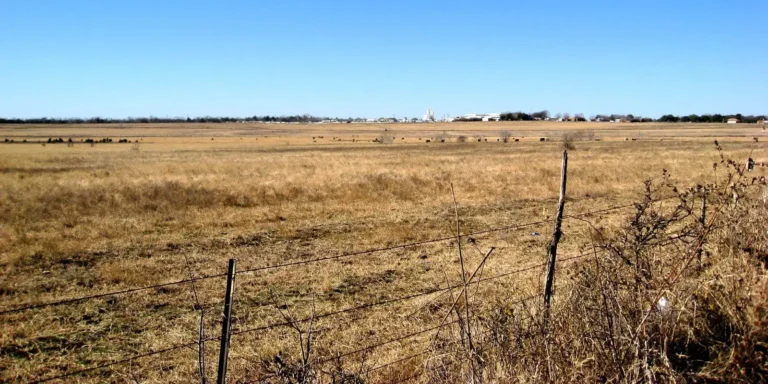
Photos: Rainbow chard growing beside orange marigolds in a raised garden bed: Missvain, CC BY 4.0, via Wikimedia Commons; Tall native grass meadow in North Texas: gurdonark, CC BY 2.0, via Flickr; Dry Central Texas grassland behind a barbed-wire fence: Staeiou, CC BY-SA 2.0, via Flickr; Rolling shortgrass prairie under a cloudy sky: jmeissen, CC BY-SA 2.0, via Flickr.