Texas
Texas Soil Testing
Home soil samples in Texas go to the Soil, Water and Forage Testing Laboratory, run by Texas A&M AgriLife Extension Service. The page below shows the fee as printed ($12 per sample for 1. Routine Analysis (R)) and the sampling steps from 6 official sources.
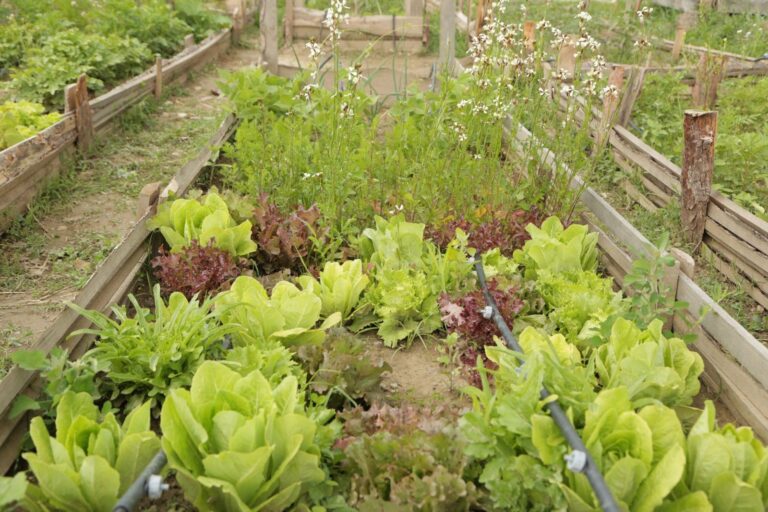
Photo: Rows of green and red lettuce growing in wooden-edged beds with drip irrigation. SA, The Green Ark, Bostanie, CC BY 4.0, via Wikimedia Commons
Where Texas gardeners send soil samples
| Lab | Address | Drop-off as printed | Online as printed | Turnaround as printed | Source |
|---|---|---|---|---|---|
| Soil, Water and Forage Testing Laboratory Texas A&M AgriLife Extension Service, Department of Soil and Crop Sciences (College Station) | USPS: 2478 TAMU, College Station, Texas 77843-2478. FedEx/UPS and other couriers: 2610 F&B Road, College Station, Texas 77845 | Lab lobby open M-F 8:00 a.m.-5:00 p.m. on days the Texas A&M University campus is open; no dropbox for after-hours dropoff. County Extension offices stock sample bags (not stated to accept samples). | Online Urban Soil Submittal Form and Payment (Aggie Marketplace credit card); printable PDF form also offered | Between 5 and 7 days for routine analyses (1999 publication E-534; no current turnaround printed on lab site) | Contact the Soil, Water and Forage Testing Laboratory |
Blank cells mean the source prints nothing for that column. Contact details can change; check the lab page before sending a sample.
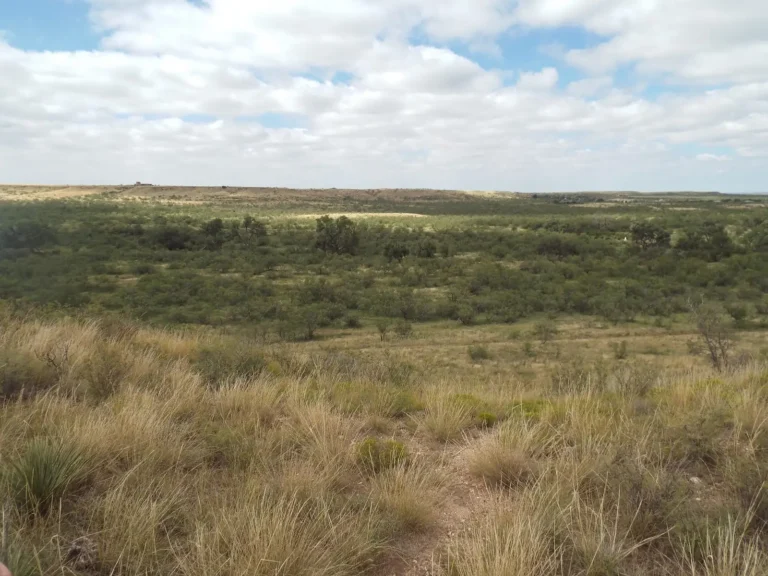
Shortgrass prairie and mesquite near Amarillo in the Texas Panhandle
Soil test fees and packages in Texas
| Lab | Test | Fee as printed | Includes as printed | For | Source |
|---|---|---|---|---|---|
| Soil, Water and Forage Testing Laboratory | 1. Routine Analysis (R) | $12 per sample | PH, NO3-N, Conductivity and Mehlich III P, K, Ca, Mg, Na, S, Boron | Home garden | Urban and Homeowner Soil Sample Information Form |
| Soil, Water and Forage Testing Laboratory | 2. R + Micronutrients (Micro) | $20 per sample | Adds Zn, Fe, Cu, and Mn to test 1 | Home garden | Urban and Homeowner Soil Sample Information Form |
| Soil, Water and Forage Testing Laboratory | 6. R + OM | $32 per sample | Test 1 plus organic matter analysis | Home garden | Urban and Homeowner Soil Sample Information Form |
| Soil, Water and Forage Testing Laboratory | 4. R + Micro + Organic Matter (OM) | $40 per sample | Test 1 plus micronutrient and organic matter analysis | Home garden | Urban and Homeowner Soil Sample Information Form |
| Soil, Water and Forage Testing Laboratory | 7. R + TEX | $37 per sample | Test 1 plus textural analysis (% sand, silt, clay) | Home garden | Urban and Homeowner Soil Sample Information Form |
| Soil, Water and Forage Testing Laboratory | 3. R + Micro + Texture (TEX) | $45 per sample | Adds soil texture to test 2 | Home garden | Urban and Homeowner Soil Sample Information Form |
| Soil, Water and Forage Testing Laboratory | 8. R + OM + TEX | $57 per sample | Test 1 plus organic matter and textural analyses | Home garden | Urban and Homeowner Soil Sample Information Form |
| Soil, Water and Forage Testing Laboratory | 5. R + Micro + OM + Texture | $65 per sample | Test 1 plus micronutrient, organic matter and textural analysis | Home garden | Urban and Homeowner Soil Sample Information Form |
| Soil, Water and Forage Testing Laboratory | 9. R + Detailed Salinity (SAL) | $47 per sample | Test 1 plus detailed salinity analysis (recommended for lower quality irrigation water) | Home garden | Urban and Homeowner Soil Sample Information Form |
| Soil, Water and Forage Testing Laboratory | 10. R + Micro + SAL | $55 per sample | Test 1 plus micronutrient and detailed salinity analyses | Home garden | Urban and Homeowner Soil Sample Information Form |
| Soil, Water and Forage Testing Laboratory | 11. R + Micro + OM + SAL | $75 per sample | Test 1 plus micronutrient, organic matter and detail salinity analyses | Home garden | Urban and Homeowner Soil Sample Information Form |
| Soil, Water and Forage Testing Laboratory | 12. R + Micro + OM + SAL + TEX | $100 per sample | Test 1 plus micronutrient, organic matter, detailed salinity and textural analysis; most comprehensive | Home garden | Urban and Homeowner Soil Sample Information Form |
| Soil, Water and Forage Testing Laboratory | Mailing of hardcopy results/invoice via USPS | $3.00 mail fee (results and invoice can be emailed in PDF form for free) | All | Urban and Homeowner Soil Sample Information Form | |
| Soil, Water and Forage Testing Laboratory | Pricing validity | Pricing valid until 12-31-2026 | All | Urban and Homeowner Soil Sample Information Form | |
| Soil, Water and Forage Testing Laboratory | Payment methods | Check/money order (payable to Soil Testing Laboratory), prepayment on Aggie Marketplace, or AG-257 Ipayments billing account; do not send cash | All | Urban and Homeowner Soil Sample Information Form |
Fees are copied from the source and can change. Older publications can print different prices, so a test can appear in more than one row; the source list below gives each date.
Soil sample depth and cores in Texas
| Step | What the source says | Applies to | Source |
|---|---|---|---|
| How deep to sample | Cut a core or divot 6 inches deep into the soil after scraping away non-decomposed plant material; put soil in a clean plastic container. | All | Urban and Homeowner Soil Sample Information Form |
| How deep to sample | When sampling perennial sod crops, sample to a depth of 4 inches and discard the surface 1/2 inch of soil; applies to all established lawns (E-534, 1999). | Lawn | Testing Your Soil: How to Collect and Send Samples |
| How many cores | Repeat the core step 8 to 10 times in the lawn or garden being tested. | All | Urban and Homeowner Soil Sample Information Form |
| How many cores | In small gardens and lawns, five to six cores may be adequate (E-534, 1999); the current urban form says 8 to 10 cores. | Garden | Testing Your Soil: How to Collect and Send Samples |
| Mixing the sample | Mix all collected soil thoroughly, removing roots and visible plant material, and fill a quart-size resealable freezer bag; air-dry if wet to the touch. | All | Urban and Homeowner Soil Sample Information Form |
| How much soil to send | One pint of rock-free soil is generally required for most analyses. | All | Urban and Homeowner Soil Sample Information Form |
| How much soil to send | Most testing suites need about 2 full cups of plant- and rock-free soil; a full pint is recommended. Texture and detailed salinity suites require at least a pint. | All | FAQ Soil / FAQ Payment Questions / FAQ Sample Status / FAQ Other Lab Options |
| Container | Sample bags are not required; 1-quart freezer zip-lock bags are acceptable. Many county AgriLife Extension offices stock bags; the lab does not. | All | FAQ Soil / FAQ Payment Questions / FAQ Sample Status / FAQ Other Lab Options |
| Labeling | Label each bag with a permanent marker and a simple sample ID matching the ID on the submittal form. | All | Urban and Homeowner Soil Sample Information Form |
| When to sample | Sample early in the season so results arrive in time for fertilizer and lime applications; air-dry in shade on clean brown paper, do not oven dry (E-534, 1999). | All | Testing Your Soil: How to Collect and Send Samples |
| When to sample | Test annually if a prior report showed non-nitrogen, limestone or elevated-salinity needs; otherwise every other or every third year may be justifiable. | All | FAQ Soil / FAQ Payment Questions / FAQ Sample Status / FAQ Other Lab Options |
| Other sampling steps | A sample should represent an area of lawn or garden treated or used similarly (front yard, back yard, planting bed, garden); sample separately where slope, texture or drainage differ. | Lawn | Urban and Homeowner Soil Sample Information Form |
| Other sampling steps | Do not sample established lawn, garden and trees together: differences in amendments, fertilization and tillage usually make the samples differ. | All | FAQ Soil / FAQ Payment Questions / FAQ Sample Status / FAQ Other Lab Options |
| Other sampling steps | The lab refuses non-conforming samples: hydrocarbon or pesticide odors or significant foreign substances such as plastics and glass. | All | FAQ Soil / FAQ Payment Questions / FAQ Sample Status / FAQ Other Lab Options |
Publications can disagree on depth and the number of cores, so each is its own row. Follow the lab you send the sample to.
Understanding Texas soil test results
| What the report or publication says | Source |
|---|---|
| Routine test is the base test for basic fertilizer recommendations. | Urban and Homeowner Soil Sample Information Form |
| The routine test determines pH, salinity, nitrate, and plant-available P, K, Ca, Mg, Na and S, and gives basic N-P-K recommendations for selected crops (E-534, 1999). | Testing Your Soil: How to Collect and Send Samples |
| All recommendations are based on a 0-6 inch sampling depth and the methods listed on the lab website. | Laboratory Nutrient Recommendations |
| Lab publishes N, P, K recommendation pages by crop/land use, including Lawn and Garden, Turf & Landscape, and Vegetable, Nut & Fruit Crops. | Laboratory Nutrient Recommendations |
| Lime requirement is needed on very acidic (pH <5.2) or acidic soils (pH <6) where alfalfa or other legumes are grown (E-534, 1999). | Testing Your Soil: How to Collect and Send Samples |
| Rating scale: pH 6.6 to 7.3 neutral; slightly acid 6.5-6.1; moderately acid 6.0-5.5; strongly acid 5.5-5.1; very strongly acid 5.0-4.5; extremely acid below 4.4; above 7.4 alkaline. | Soil Acidity and Liming |
| A buffer-pH test should be used to more accurately predict the limestone needed to raise soil pH to a desired level. | Soil Acidity and Liming |
| Lab lime rates assume 100% effective limestone; ag limestones generally have ECCE 50-70%, so divide the recommended rate by ECCE/100. | Soil Acidity and Liming |
| Limestone can be applied at any time; soil moisture is critical to its reaction, and incorporation makes it most effective. | Soil Acidity and Liming |
| Optimum nutrient uptake by most crops occurs at a soil pH near 7.0. | Soil Acidity and Liming |
| Lab does not offer analyses for heavy metals, microbial communities, pesticides or other non-traditional plant-nutrient uses. | Urban and Homeowner Soil Sample Information Form |
| Reports are emailed; the first update on sample status is generally the emailed report, and several days may pass between receipt and data entry. | FAQ Soil / FAQ Payment Questions / FAQ Sample Status / FAQ Other Lab Options |
| Pdf publication E-534 lists the available tests: routine, micronutrients, boron, detailed salinity, lime requirement, texture and organic matter (1999). | Testing Your Soil: How to Collect and Send Samples |
pH targets as printed
| Crop or use | Range as printed | Source |
|---|---|---|
| Most crops (optimum nutrient uptake) | near 7.0 | Soil Acidity and Liming |
Only what the sources print is shown. Where no pH target is printed for a crop, none is given here.
Texas soil testing: questions
What does the Texas extension soil lab charge?
1. Routine Analysis (R) at the Soil, Water and Forage Testing Laboratory: $12 per sample, as printed by Texas A&M AgriLife Extension, Soil, Water and Forage Testing Laboratory. Other tests and older prices are in the fee table above.
When do I get soil test results back in Texas?
The Soil, Water and Forage Testing Laboratory prints: Between 5 and 7 days for routine analyses (1999 publication E-534; no current turnaround printed on lab site). Source: Texas A&M AgriLife Extension, Soil, Water and Forage Testing Laboratory.
What sampling depth does Texas extension give for lawns?
Cut a core or divot 6 inches deep into the soil after scraping away non-decomposed plant material; put soil in a clean plastic container. Source: Texas A&M AgriLife Extension, Soil, Water and Forage Testing Laboratory. Other sources print different depths, as shown above.
Are the Texas soil test fees official?
Only Texas A&M AgriLife Extension, state agency and other official pages are used, listed with dates below. Nothing here comes from private lab advertising, nurseries, news or blogs. Items no source prints are left out, not filled in.
Official sources: Texas soil testing
- Urban and Homeowner Soil Sample Information Form, Texas A&M AgriLife Extension, Soil, Water and Forage Testing Laboratory. Date: Pricing valid until 12-31-2026. Read November 18, 2026.
- Contact the Soil, Water and Forage Testing Laboratory, Texas A&M AgriLife Extension, Soil, Water and Forage Testing Laboratory. Date: no date printed. Read November 18, 2026.
- FAQ Soil / FAQ Payment Questions / FAQ Sample Status / FAQ Other Lab Options, Texas A&M AgriLife Extension, Soil, Water and Forage Testing Laboratory. Date: no date printed. Read November 18, 2026.
- Laboratory Nutrient Recommendations, Texas A&M AgriLife Extension, Soil, Water and Forage Testing Laboratory. Date: no date printed. Read November 18, 2026.
- Testing Your Soil: How to Collect and Send Samples, Texas Agricultural Extension Service (Texas A&M System), E-534. Date: 8/99. Read November 18, 2026.
- Soil Acidity and Liming, Texas A&M University System, Agriculture Program, SCS-2001-06. Date: no date printed. Read November 18, 2026.
Only extension services and other official agencies are used.
More for Texas: Texas gardening, lawn care calendar, what to plant now and planting zones.
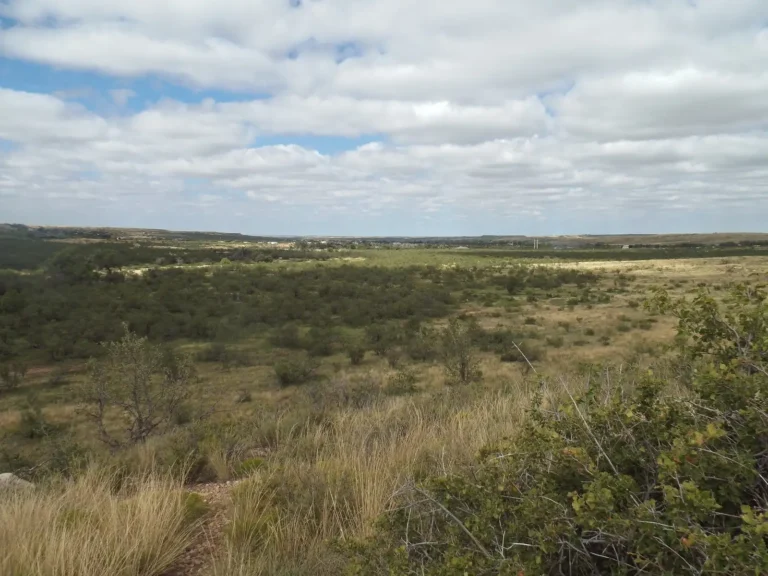
Photos: Rows of green and red lettuce growing in wooden-edged beds with drip irrigation: SA, The Green Ark, Bostanie, CC BY 4.0, via Wikimedia Commons; Panhandle prairie stretching to the horizon near Amarillo: gurdonark, CC BY 2.0, via Flickr; Shortgrass prairie and mesquite near Amarillo in the Texas Panhandle: gurdonark, CC BY 2.0, via Flickr.